TL;DR: Coway Icon 2 water purifier earns strong buy recommendation after 6 months of satisfied use, replacing expensive bottled water deliveries.
What are the Coway Icon 2's main specifications?
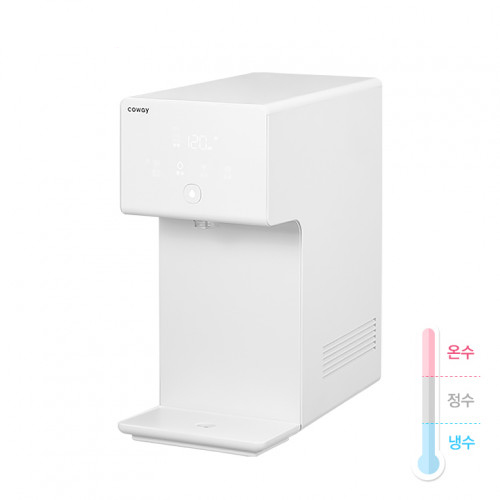
- Model: CHP-7211N (Coway Icon Water Purifier 2)
- Type: Direct-flow cold/hot/ambient water purifier
- Water types: Cold, hot, ambient (room temp)
- Hot water temps: 44°C / 70°C / 85°C / 100°C (4 levels)
- Cold water temp: About 5~7°C
- Preset volumes: Half cup (120ml), one cup (250ml), two cups (500ml), continuous
- Sterilization: Auto UV sterilization (every 6 hours, 4× daily for 15 min each)
- Size: 180mm × 340mm × 385mm (W×D×H)
- Filters: Nanotrap + Plus Innocence(D) — replaced every 6 months
- Faucet: Detachable for cleaning, replaced yearly
- Maintenance: Self-care (every 6 months) or technician visit (every 4 months)
- Colors: Snow White, Truffle Silver, Pebble Grey, Blossom Pink, Mint Green, Mineral Blue (6 options)
- Extras: IoT app, hot water child lock, rear dust filter
Coway in Korea — A Local Brand Worth Knowing
Coway is a Korean brand, and this water purifier is about as Korean as it gets. Walk into virtually any Korean apartment or office and you'll spot a Coway purifier in the kitchen. They're that common. For foreigners in Korea, Coway is one of those products you should know about — the rental model is genuinely well-suited to expat life, and you can set up the whole thing on Coupang or through Coway's own website without speaking Korean. If you're tired of hauling bottled water, this is the upgrade most Koreans eventually make.
For two years before I moved, I only drank bottled water. I'd order 2L 12-packs through Coupang's rocket delivery — about 2~3 boxes a month. Since delivery handled the heavy lifting, I never really complained.
Then I moved apartments and started renting a Coway Icon 2 water purifier... and honestly, I wish I'd done it sooner. Six months in, I have zero desire to go back to bottled water.
Why did I decide to rent a water purifier?
My new apartment kitchen was tiny. No space to stack bottled water boxes like I used to. In Korea, most people rent water purifiers instead of buying them — you pay a monthly fee that covers installation, filter delivery, and free repairs. The contract is typically 3 years, which felt manageable considering I was already spending on bottled water every month.
I compared LG PuriCare, SK Magic, and Coway. For my small studio, size was priority #1, then hot water temperature, then design.
Why did I pick the Coway Icon 2?
1. It's incredibly compact
The Icon 2 is only 180mm wide. That's narrower than the short side of an A4 sheet of paper (210mm). It barely takes up any counter space. When the technician installed it, I was genuinely surprised at how small it looked in person.
2. Hot water actually hits 100°C
Most water purifiers top out at 85°C, which means lukewarm ramen. The Icon 2 goes up to 100°C, and you can cycle through 44°C, 70°C, 85°C, and 100°C by tapping the hot water button. I completely got rid of my electric kettle — morning coffee at 85°C, cup noodles at 100°C. The convenience is unreal.
3. Six color options
I went with Snow White and it looks like a design object in my kitchen. There's also Truffle Silver, Pebble Grey, Blossom Pink, Mint Green, and Mineral Blue if you want to match your kitchen aesthetic.
What do I love after using it 6 months?
Way more convenient than bottled water
One button press = ice-cold water at 5~7°C, instantly. No more pulling bottles from the fridge. The water tastes clean — zero tap water smell, and honestly indistinguishable from bottled water.
Preset volumes are surprisingly useful
The half cup (120ml), one cup (250ml), and two cups (500ml) buttons mean you never have to stand there watching your glass fill. Press and walk away. For tumblers, just long-press for continuous flow.
UV sterilization runs automatically
Every 6 hours, the machine runs a 15-minute UV sterilization cycle — four times a day. I never have to think about hygiene.
Filter changes are dead simple
With the self-care plan, filters arrive by mail every 6 months. Open the front panel, pull old filter out, push new one in — done in 60 seconds. The faucet (water outlet) gets fully replaced once a year too.
The IoT app is cool (and slightly creepy)
The Coway app tracks your daily water intake, filter life, and usage patterns. When I came back from a trip, it sent me a notification: "Water has not been used." A little Big Brother, but useful for knowing when filters need changing.
What are the main drawbacks and downsides?
Fixed faucet position
This is my biggest complaint. The faucet doesn't swivel or adjust. Small espresso cups get splashed, and tall tumblers (500ml+) sometimes need to be tilted to fit. No built-in light on the faucet either, so it's hard to see water levels in a dark kitchen.
Cold water gets less cold in summer
This is important. The Icon 2 runs warm on the back due to its compact size. In winter, no issue — the cold water is perfectly chilled. But in peak summer when the kitchen hits 30°C+, the cold water noticeably warms up. Tip: Clean the rear dust filter every 2~3 weeks to maintain cooling efficiency.
Hot water needs recovery time
Since it's tankless (direct flow), drawing 3~4 cups of 100°C water back-to-back requires a 1~2 minute wait for reheating. Fine for one person; potentially frustrating for a family of four wanting coffee simultaneously.
Some noise at 100°C
When dispensing boiling water, there's a hissing/heating noise around 40~45dB — about the level of a quiet office. I got used to it quickly, but noise-sensitive people might notice.
3-year contract + return fee
Early termination means a penalty fee. And even after the full 3 years, some users report a ~40,000 KRW return/collection fee. Read the contract carefully.
How much does the rental actually cost?
| Self-care | Technician visits | |
|---|---|---|
| Service cycle | Every 6 months | Every 4 months |
| Base monthly fee | 33,900 KRW | 37,900 KRW |
| With partner card | ~20,900~26,900 KRW | ~24,900~30,900 KRW |
| Contract | 3 years | 3 years |
| 3-year total (base) | ~1.22M KRW | ~1.36M KRW |
💳 Credit Card Discount Tip
Partner credit card discounts are significant. The KB Kookmin Coway2 card, for example, gives up to 15,000 KRW/month off with 400K KRW monthly spending. Hyundai, Samsung, NH, Woori, IBK, and Lotte cards also offer deals. Always ask about card partnerships when signing up.
Is it cheaper than buying bottled water?
| Bottled water | Purifier (self-care + card discount) | |
|---|---|---|
| Monthly cost | ~24,000 KRW | ~20,900~26,900 KRW |
| Electricity | None | ~2,000~3,000 KRW/month |
| Electric kettle | Needed (extra cost) | Not needed |
| Plastic waste | 36 PET bottles/month | Zero |
| Convenience | Order → stack → open | Press a button |
The purifier costs about the same — or even less — than bottled water once you factor in the kettle savings and card discounts. Plus, eliminating 36 plastic bottles a month feels great.
Who should and shouldn't get this purifier?
Great for:
- ✅ Studio/small apartment dwellers (180mm width!)
- ✅ Solo living or couples
- ✅ People who want to ditch their electric kettle
- ✅ Anyone tired of bottled water logistics
Think twice if:
- ❌ Moving or leaving Korea within 1~2 years (3-year contract)
- ❌ Large family needing tons of hot water at once
- ❌ Extremely picky about cold water temperature in summer
Six months in, I use it every single day and still think it was one of my best decisions. Wish I'd started years ago.
Frequently Asked Questions
Q: Are AliExpress home appliances good quality?
Many are surprisingly good for the price. Focus on products with high sales volume (1,000+) and positive reviews (90%+). The key is doing your research before buying.
Q: Do I have to pay customs duty in Korea?
Orders under $150 (about 200,000 KRW) are duty-free. Above that, you may pay 8-13% customs duty depending on the product category.
Q: What if the product arrives damaged or defective?
AliExpress has a Buyer Protection policy. You can open a dispute within 15 days of delivery for a refund or replacement. Always save photos and videos as evidence.
What are some similar alternatives worth considering?
- USB LED Grow Light Review — Full Spectrum Plant Lamp for Under $4
- Electric Heating Pad Review — 30x60cm with 9 Temperature Settings & Timer
- Best Mini Washing Machines 2026 — Compact Washer Guide for Small Apartments
This post contains affiliate links.