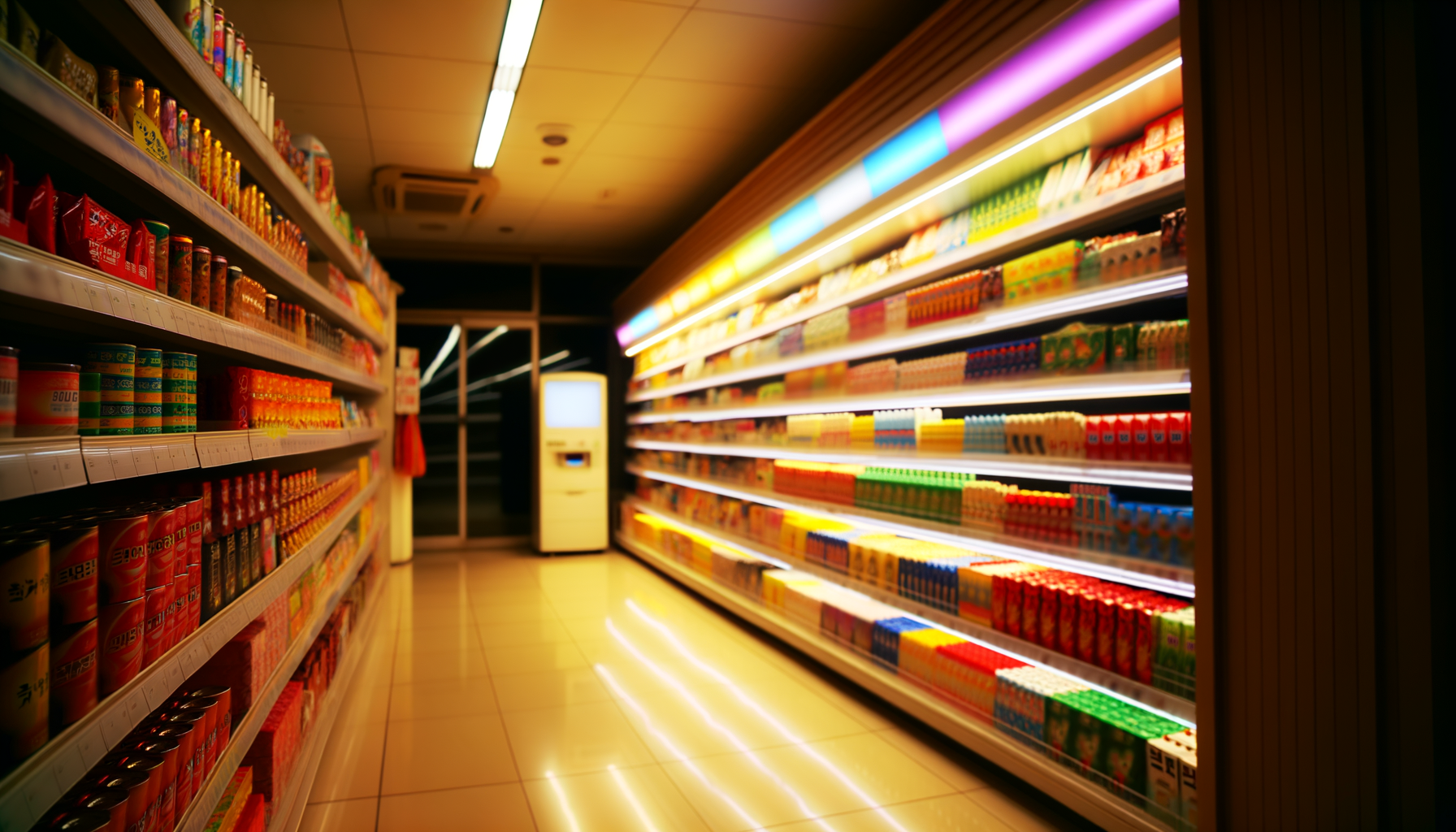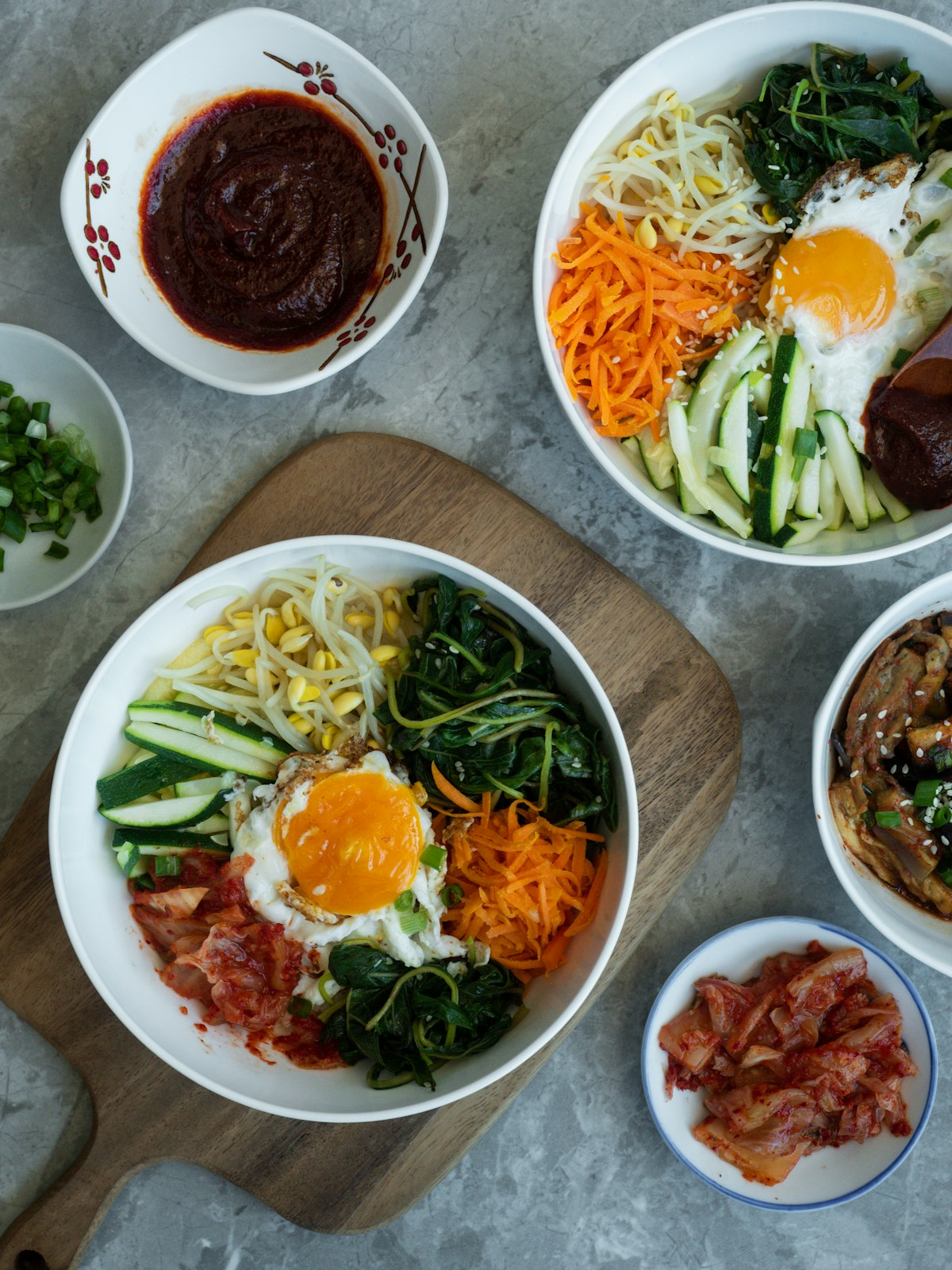
The first time I walked into a Korean supermarket, I stood in the produce section for a solid three minutes trying to figure out which of the unfamiliar green bundles was spinach. Nothing looked quite right. Everything was wrapped in plastic in configurations I'd never seen. Labels were entirely in Korean. A halmeoni beside me was loading her cart like a woman on a mission while I just... froze.
That was two years ago. Now I navigate the 이마트 like it's my second home. But getting here took some actual learning — some frustrating, some surprisingly fun. This is what I wish someone had told me on day one.
So which supermarket do you actually go to?
Korea's grocery landscape is dominated by three big players: Emart (이마트), Homeplus (홈플러스), and Lotte Mart (롯데마트). Emart is the largest — 178 stores nationwide, founded in 1993 by Shinsegae Group. Think of it as Korea's answer to a Western hypermarket, but cleaner and somehow more stressful on weekends. Homeplus runs 142 hypermarkets plus hundreds of smaller Express stores, originally born as a Samsung-Tesco joint venture in 1997, which explains its slightly Western-influenced layout. Lotte Mart has 175 locations across Korea, and the Seoul Station branch deserves a special mention just for sheer convenience — you can pick up groceries on your way home from literally anywhere in the country.
All three are perfectly solid for day-to-day Korean groceries: produce, meat, seafood, tofu, noodles, sauces. Where they start to fall short is for imported goods. There's usually a small 수입 (import) aisle with some pasta, foreign-brand sauces, and cereals, but the selection is limited and the prices — let's just say you'll notice.
What about actually finding food from home?
This is the part that catches most new arrivals off guard. Imported food in Korea is genuinely expensive. A block of decent imported cheese can run you ₩15,000 to ₩30,000+. Butter from Europe? Budget accordingly. Beef is the real shocker: average beef prices sit around ₩38,200 per kilogram (Numbeo, Feb 2026), and Korean hanwoo is treated as the premium product it is. Even imported US or Australian beef costs significantly less than hanwoo but still isn't cheap by global standards. Chicken fillet at around ₩12,300 per kilogram, eggs at ₩4,200 for a dozen — those are actually reasonable. The everyday staples are fine. It's the Western luxuries that hurt.
For Western staples in quantity, Costco is the answer most long-term expats land on. There are around 16 stores across Korea, concentrated in major cities and suburbs — the Yangjae, Mapo, and Hanam locations are the most popular with the expat crowd. If you already have a Costco membership from home, it works here without any extra steps. Korean Costco stocks the things you actually miss: bulk cheese, butter, olive oil, wine, cereals, imported meats, maple syrup, granola bars. Things you genuinely cannot find anywhere else at reasonable prices.
The Emart Traders chain runs on a similar warehouse-club format, and it's worth knowing about if you're not near a Costco. Good selection of imported wine, cheese, and bulk pantry items. Think of it as the domestic Costco alternative.
Where do you go for the really hard-to-find stuff?
Itaewon is the neighborhood every expat eventually discovers. Grand Mart (이태원 그랜드마트), near the Hamilton Hotel, is legendary among the foreign community: Middle Eastern halal products, Indian spices, Southeast Asian staples, Mexican ingredients (tortillas, salsa, jalapeños), British and American cereals, European cheeses. Multiple smaller shops line the main Itaewon-ro strip selling specialty ingredients from basically everywhere. There's also a cluster of halal butchers and grocery stores near Seoul Central Masjid — halal meats, Middle Eastern spices, Pakistani and Bangladeshi staples.
Itaewon is the place you go when you've exhausted all other options and just need actual mozzarella, or the specific hot sauce you've been craving for three months.
Have you tried Coupang yet?
If you've been in Korea more than a week, someone has already mentioned Coupang. It's often called "the Amazon of Korea" — which is a fair description. Revenue hit $30.3 billion in 2024. An astonishing 70% of Korean citizens live within 10 minutes of a Coupang logistics center (Coupang press materials; verify current figure).
For groceries specifically, Rocket Fresh (로켓프레시) is Coupang's grocery arm. Order before midnight, and fresh items often arrive by 7am. It's genuinely impressive. The dawn delivery concept — 새벽배송 — is one of those uniquely Korean innovations that makes you never want to go back.
The catch for foreigners: the app is entirely in Korean. You'll need a Korean phone number to register, and navigating the interface takes some getting used to. Google Chrome's auto-translate helps on the website, but the app becomes manageable once you know the general layout. This is not optional — all major grocery delivery platforms require a Korean phone number. Get a Korean SIM card first, and this problem goes away.
Market Kurly (마켓컬리) runs a competing dawn delivery service and skews toward premium — high-quality produce, artisanal Korean products, some imported European items. Registration requires an ARC (Alien Registration Card). If you care more about quality than price, it's worth exploring once you're set up.
What's the deal with traditional markets?
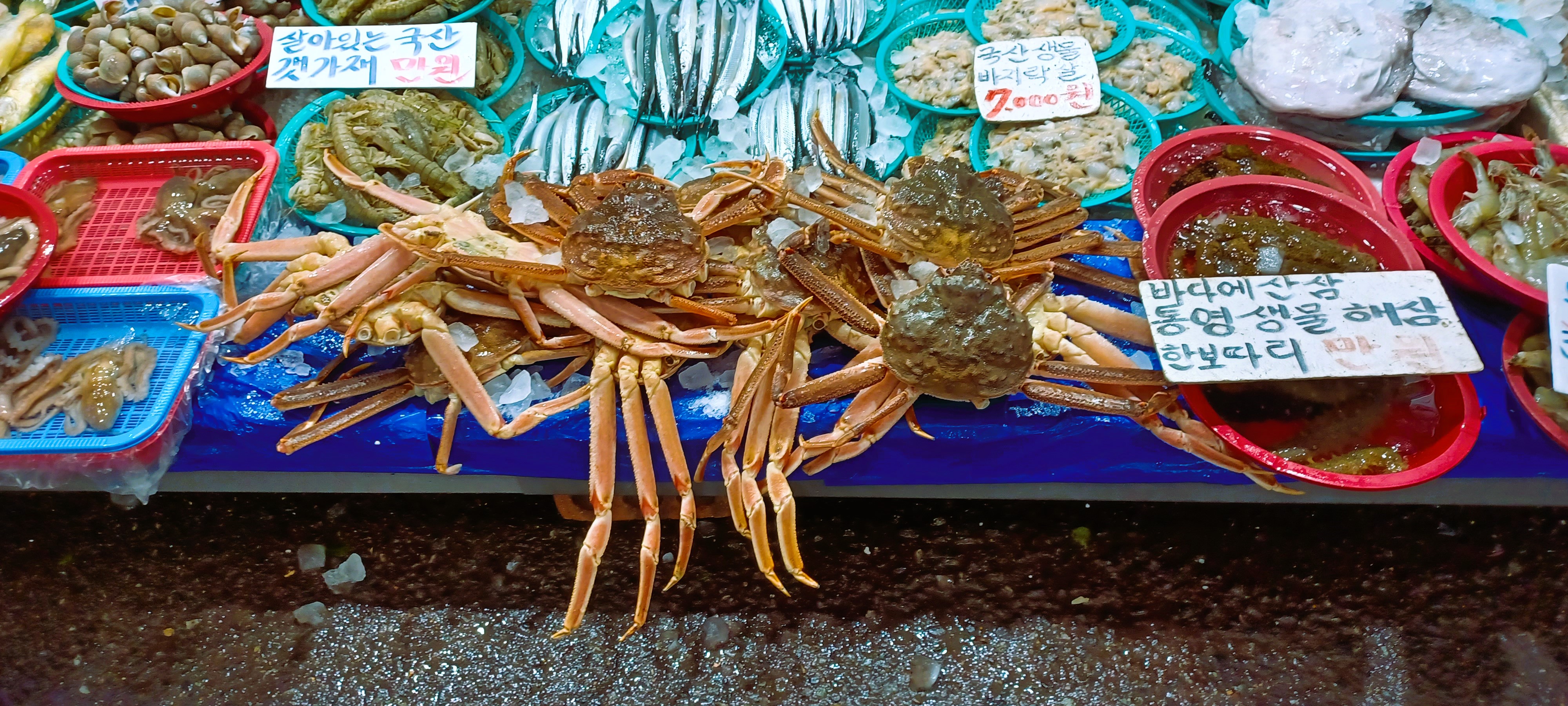
시장 (traditional markets) get less love from the expat community than they deserve. Fresh produce is genuinely cheaper than supermarkets. Seafood is fresher. The atmosphere is the closest thing to a complete sensory immersion you'll get in daily Korean life.
The catch is that English is essentially nonexistent. You'll be pointing at things, holding up fingers for quantities, and deploying Google Translate's camera mode constantly. None of this is actually a problem — it just requires a moment of accepting that you're not the expert here.
In Seoul, the main ones worth knowing: Namdaemun Market is the largest traditional market in Korea, with over 10,000 stores, and it's manageable even for nervous beginners — some stalls even sell imported goods and spices from China and Southeast Asia. Gwangjang Market is famous for raw fish and bindaetteok (mung bean pancakes). Noryangjin Fish Market is the wholesale seafood experience: pick your fish live from the tanks, and the vendors will prepare it on the spot. Cash is still preferred at many stalls, though that's slowly changing. And don't try to haggle — it's not really the done thing here, unlike some other Asian markets.
The convenience store is not a fallback option — it's infrastructure
Korea has one of the highest convenience store densities in the world. CU, GS25, 7-Eleven, Ministop, and Emart24 are literally on every block, open 24 hours a day, seven days a week. For emergency groceries — eggs (around ₩4,200 for 12), instant ramen, drinks, snacks — they're genuinely adequate. You can also get actual hot food: fried chicken, tteokbokki, sausages rotating on a heated roller. Triangle kimbap is an institution, and sooner or later you'll eat one standing in a parking lot at 11pm and find it perfectly satisfying.
The convenience store is not where you do your main shop. It's the infrastructure that keeps you functional between shops.
Can you even read the labels?
Short answer: not without help, and you shouldn't pretend otherwise. Korean food labels don't come with English translations. The key vocabulary to know: 유통기한 (expiry/best-by date), 원재료 (ingredients), 알레르기 유발물질 (allergen section, usually bolded). 국내산 means domestically produced; 수입산 means imported, followed by the country of origin. 유기농 means organic; 무농약 means pesticide-free.
Google Lens and Naver Lens both do a reasonable job translating labels in real time. Use them aggressively. The Naver Shopping app also lets you scan barcodes to get product information in Korean, which you can then translate. It sounds clunky, and it is, slightly — but you get fast at it.
The honest version of how this works
Korean grocery shopping as a foreigner is completely manageable once you stop expecting it to be exactly like home. The big supermarkets cover your daily basics at fair prices for local items. Costco handles your Western cravings in bulk. Coupang Rocket Fresh handles convenience and overnight delivery. Itaewon handles the hard-to-find imported stuff. Traditional markets handle fresh produce and seafood at better prices than supermarkets. Convenience stores handle 2am ramen emergencies and surprisingly decent prepared food.
Get a Korean SIM card first — you need the phone number for every delivery app. Get your ARC sorted for platforms that require it. Download Google Translate for label reading. Rice at ₩4,300 per kilogram is actually cheaper than what many of us paid at home. Milk at ₩2,900 per liter is fine. The cheese will still be expensive. That one you just have to accept.