Nobody warned me about August.
I arrived in Seoul in late July, during the tail end of jangma — Korea's monsoon season — and thought I'd timed it well. The rain was easing off. But what came next was somehow worse: the air turned thick and heavy, the kind of humid you feel in your lungs. August in Seoul sits around 30°C with humidity peaking at 76.2% in July, and even after the rains stop, that moisture doesn't go anywhere. It just sits there, on you.
That first summer taught me something about Korea: the seasons here aren't suggestions. They're events.
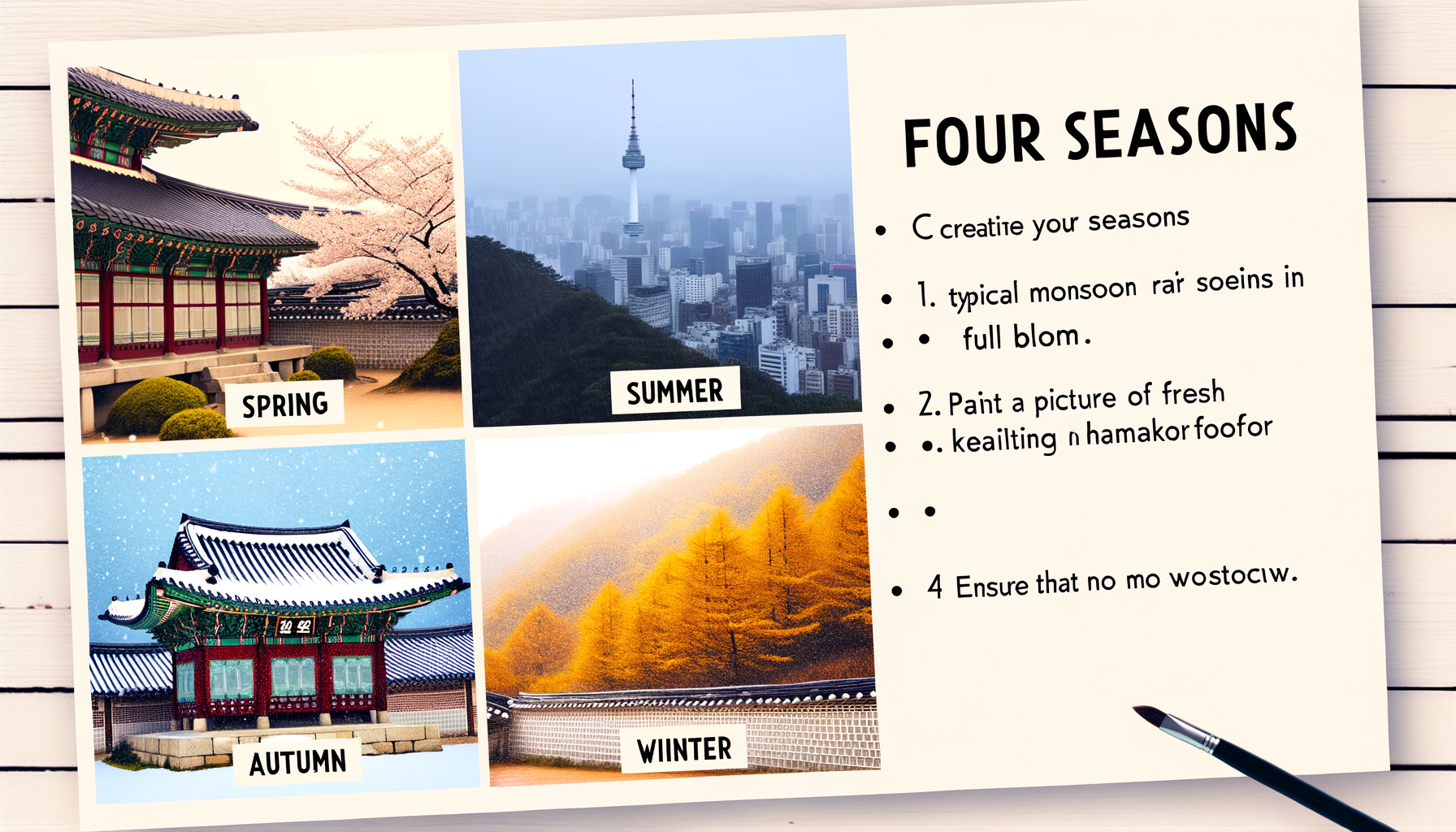
Korea sits in a humid continental climate with four genuinely distinct seasons. The swing between the coldest and hottest months is nearly 28°C, which is a bigger range than most Europeans or North Americans are used to. Getting a handle on that before you arrive — or before you book your trip — makes a real difference.
Spring Looks Beautiful. Don't Trust It.
March arrives and everyone gets excited. The cherry blossoms come in late March to early April, peak for maybe one to two weeks, then they're gone. It's one of those things that feels fleeting enough that you actually prioritize going to see it — Yeouido, Namsan, the streets near Gyeongbokgung. April is when the real spring weather kicks in: temperatures between 8°C and 18°C, pleasantly cool, jackets optional by afternoon.
But spring has a catch, and it's a big one: yellow dust.
황사 (hwangsa) is fine dust blown in from the deserts of Mongolia and China, and it rolls through Korea from roughly February to May, peaking hard in March and April. These days it mixes with industrial pollution and the air quality on bad days is genuinely hazardous — not "annoying" but "stay inside if you can." Locals wear KF94 masks on these days without a second thought. You should too. Download 에어코리아 or AirVisual before spring hits and check it every morning.
For packing, spring is the classic layering season. March mornings can still dip to 2°C while April afternoons feel warm enough for a light shirt. A sweater plus a mid-weight jacket covers most of it. By May — 13°C to 23°C — you're in easy territory. Just keep the mask accessible.
Why August Is Brutal (And Why Indoor Korea Is Freezing)
Summer in Korea is two very different experiences stitched together. There's jangma — the monsoon, roughly late June through late July — and then there's the post-monsoon heat, which many people find harder to deal with.
During jangma, July can dump 414.4mm of rain in a single month. That's about a third of Seoul's entire annual rainfall of 1,417.9mm in one month. A compact umbrella isn't optional during this period, it's a daily essential. The rain comes in heavy bursts, and it doesn't wait for you to find cover. Get waterproof shoes. Walk carefully around underpasses and low-lying areas — flooding can happen fast.
Then jangma ends, and August arrives.
With temperatures maxing out at 30°C and humidity that doesn't budge, August is the month you renegotiate your relationship with going outside. You learn the route between subway exits and air-conditioned spaces. You understand why convenience stores are social hubs. You also discover something peculiar: indoor Korea is often aggressively cold. Malls, cafes, cinemas, office buildings — they overcool. Bring a light cardigan or thin long-sleeve in your bag even when it's 30°C outside, because you will freeze at the movies.
July through September is also typhoon season. Korea gets roughly one significant typhoon per year. They bring heavy rain and strong winds, sometimes disrupting public transport. Check the KMA (Korea Meteorological Administration) app if a storm is tracking toward the peninsula.
For packing, summer is straightforward — breathable fabrics, sunscreen, that umbrella. The layer for indoor AC is the thing people always forget until they're shivering in a café in August.
What Nobody Tells You About Autumn
Autumn is the reason most long-term expats say "actually, Korea is incredible."
After the humidity of summer, September and October feel like the weather finally made amends. Skies turn sharp and blue. The air dries out. October sits between 10°C and 20°C in Seoul — perfect for almost everything. The fall foliage, called 단풍 (danpung), spreads across the mountains and parks in waves: it hits the northern mountains like Seoraksan in mid-October, reaches Seoul by late October, and works its way south into November.
There's almost no rain. Air quality is usually excellent. The light has that golden-afternoon quality that makes the city look genuinely beautiful, and the hiking trails get crowded for good reason — being on a Korean mountain in October, watching the leaves turn against clear blue sky, is one of those Korea experiences that stays with you.
If you're visiting and can only pick one season, pick autumn. October especially.
For packing, September still feels like the tail end of summer in the first half, so keep the lighter clothes. By mid-October you want sweaters and a light jacket. November turns cold fast — 3°C to 12°C — and by the end of the month, a proper winter coat makes an appearance.
The Cold That Hits Different
People underestimate Korean winter. January in Seoul averages a high of 2°C and low of -6°C, but those are still numbers on a screen. What they don't capture is the Siberian wind.
The cold in Korea comes with northwest winds off Siberia, and during cold snaps those gusts can make temperatures feel like -10°C to -15°C. "I thought -5°C wasn't that cold until the wind hit" — that's a sentence I've heard from multiple foreigners. It is not a dry academic cold. It's a cutting wind that goes straight through cheap coats.
Seoul gets its first snow around November 20 on average, and winter sees some proper snowfall — though less than you'd expect. Sidewalks get icy. Get boots with actual grip.
What makes Korean winter survivable — and honestly, sometimes cozy — is ondol (온돌). This is the traditional underfloor heating system, and nearly every apartment in Korea has it. Your floors are warm. Genuinely, radiantly warm. Coming home after being lashed by cold wind and peeling off your layers to sit on a heated floor with a cup of ramyeon is a very particular kind of comfort that becomes one of the things you'll miss if you ever leave.
Gangwon province, if you head there for skiing, is a different story — brutal cold, heavy snow. Busan's winters are noticeably milder than Seoul, rarely dropping below -5°C. Jeju is subtropical and can be green and mild even in January.
For packing, don't skimp on the coat. Not a fashion coat — a real insulated one. Thermal underlayers are worth it. Thick socks, boots with grip for icy mornings. Hat, scarf, and gloves are non-negotiable once January hits. Hand warmers (핫팩) are available at every convenience store for about 1,000 won each and they are worth every single won.
The Honest Ranking (In Case You Need It)
October is the best month in Korea. Nearly every expat who's been through a full cycle will tell you that. It's not even close.
August is the hardest. Plan light, stay hydrated, embrace the AC.
Spring is beautiful but brief. If cherry blossoms are the reason you're coming, check the forecast obsessively the week before — the peak window really is that short.
Winter is cold, but ondol makes it livable. Dress properly, and you might actually enjoy it.
Korea earns its reputation for extreme seasons. But each one has something worth experiencing — even August, if you find the right rooftop bar.