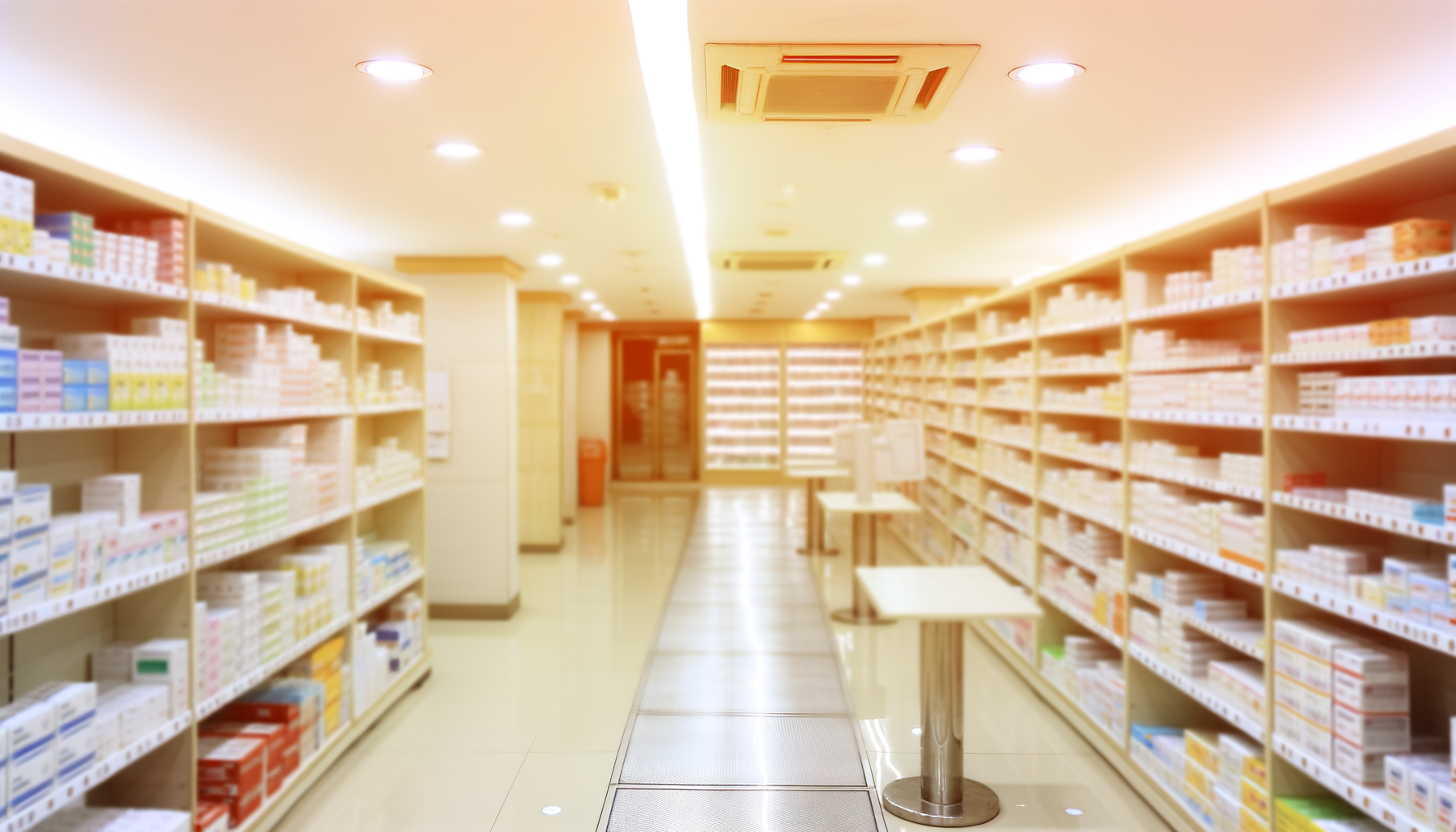
It started with a scratchy throat on a Tuesday. By Thursday I was lying in my apartment in Mapo-gu, head pounding, nose running, wondering if I should just suffer through it or actually figure out how getting medicine works in a country where I barely speak the language.
That was my first real encounter with the Korean pharmacy system. And honestly? It went way better than I expected.
The green cross is your friend
You've probably noticed them already — those green cross signs that seem to appear every thirty meters in Korean neighborhoods. That's a 약국 (yakguk), and once you know what you're looking for, you'll realize they're absolutely everywhere. Near subway exits, next to clinics, tucked into the ground floor of apartment buildings. For basic illness, your nearest one is probably a five-minute walk away.
The thing to know upfront is that most items are not sitting on open shelves for you to browse. You walk up to the counter and ask. That's how it works. It sounds intimidating if your Korean is limited to ordering coffee, but the pharmacists here are used to this and will figure out what you need — especially in Seoul, especially near universities or hospitals.
Should I see a doctor first?
Depends on what's going on. For a cold, sore throat, or upset stomach, you can go straight to the pharmacy and pick up OTC medication without any prescription. But if you think you might actually have an infection — or if things aren't improving after a couple days — going to a clinic first is the smarter move. And here's the part that always surprises people new to Korea: it's absurdly fast and cheap.
You walk into a clinic, see a doctor, get a prescription, walk to the pharmacy next door (there's almost always one literally next door), and you're done. With NHIS insurance, the whole thing — consultation plus antibiotics — often comes out to less than the equivalent of ten US dollars total. Even without insurance, as a tourist or short-term visitor paying full price, a clinic visit runs around ₩10,000–₩25,000, and antibiotics come to maybe ₩15,000–₩30,000. Still cheap by most Western standards.
This works because of something called 의약분업 (uiryak buneoep) — the separation of prescribing and dispensing that Korea put in place back in 2000. Doctors prescribe. Pharmacists dispense. They don't overlap, which means the pharmacy cannot give you prescription drugs (antibiotics, birth control, antidepressants, blood pressure medication) without a doctor's note. When you hand over your prescription, they fill it while you wait — usually just a few minutes.
If you have an Alien Registration Card (ARC), bring it when picking up prescription medicines with insurance. Without it, you can still get the medication but you'll pay full price.
What you can get without a prescription
Back to my Thursday sick day. I didn't have a prescription, so I went straight to the yakguk and managed to communicate "cold medicine" by typing 감기 into my phone and showing it to the pharmacist. She immediately handed me a blister pack of 판피린 (Panpyrin) — this slightly citrusy OTC cold medicine that's been iconic in Korea for decades. It runs about ₩3,000–₩6,000 for a pack, which is nothing.
For headaches or fever, you'll want 타이레놀 (Tylenol/acetaminophen) or 부루펜 (Brufen, the Korean name for ibuprofen). Both are freely available OTC. There's also 게보린 (Geborin), a Korean painkiller combo that includes caffeine — a lot of locals swear by it for headaches. A box of twenty Tylenol tabs runs somewhere between ₩3,000 and ₩7,000.
Stomach troubles? The most charming thing you'll encounter is 까스활명수 (Hwalmyeongsu) — these tiny dark brown glass bottles of digestive remedy that taste like herbal medicine and have been around since 1897. They're so common you can actually buy them at convenience stores, but they're at every pharmacy too. For an antacid, 겔포스 (Gelfos) is the Korean go-to. If you're dealing with diarrhea specifically, 정로환 (Jeongno-hwan) is what pharmacists tend to recommend.
Allergies are another area where Korea is genuinely great for foreigners. 지르텍 (Zyrtec, cetirizine) and 알레그라 (Allegra, fexofenadine) are both OTC here — no prescription needed. In a lot of Western countries you'd need a doctor for these. Here you just ask at the counter.
One thing that trips up a lot of people: 후시딘 (Fucidin) ointment. It's an antibiotic topical cream that you need a prescription for in the US, UK, and most of Europe — but in Korea it's OTC. Same with 마데카솔 (Madecassol), a centella-based wound cream that's practically a staple in Korean households. Both are great to have on hand, and both are under ₩15,000.
Talking to the pharmacist when your Korean is limited
So here's the part people dread, and I get it. Most Korean pharmacists, especially outside Seoul's tourist zones, have limited English at best. But the good news is you really don't need much.
The most useful phrase is probably 진통제 주세요 (jintongje juseyo) — "please give me a painkiller." Or just 감기약 주세요 (gamgiyak juseyo) for cold medicine. If you can name the symptom, even better: 두통 (dutong) is headache, 열 (yeol) is fever, 기침 (gichim) is cough, 설사 (seolsa) is diarrhea. You don't need perfect pronunciation — just try, and point if you need to.
The pharmacist will likely ask 언제부터요? (eonje buteoyo?) — "since when?" Hold up your fingers for the number of days. That's genuinely enough to get through the interaction.
Google Translate's camera mode is also genuinely useful here. If you pick up a box and can't read the Korean, just point your camera at it and you'll get a rough translation of the dosage instructions. It's not perfect but it works well enough.
One more thing: Korean OTC medicines are generally on the milder side. If you're actually sick — not just mildly under the weather — the local expat community consensus is to just go to a clinic. It's so fast and affordable that there's really no reason not to.
A few things I didn't expect to find there
Korean pharmacies stock more than just medicine. KF94 masks are a staple. Pimple patches (hydrocolloid — the thin round stickers you've seen all over social media) are usually just ₩2,000–₩5,000 for a pack and way cheaper here than abroad. Melatonin is OTC. Motion sickness pills like 키미테 (Kymite) are right there at the counter.
And a tip for skincare fans: Madecassol cream and Fucidin ointment have become something of a cult buy among people visiting Korea, and for good reason. They're cheap, they work, and you can't get them OTC back home. The pharmacy is the move for those.
Worth knowing: Olive Young, the big health-and-beauty chain with stores all over Korea, stocks a lot of the same OTC items — Zyrtec, pimple patches, some basic cold medicine. It's not a traditional pharmacy and can't dispense prescriptions, but it's open longer hours and often easier to browse.
If you need a pharmacy on a holiday or late at night
Most pharmacies run regular daytime business hours, so if you get sick on a Sunday evening things get trickier. The best resource for finding emergency pharmacies open outside normal hours is e-gen.or.kr — this one works well on mobile. There's also pharm114.or.kr but it's more of a desktop site. Bookmark the e-gen one on your phone just in case.
I spent a week being mildly worried about getting sick abroad before my first time at a Korean yakguk. After that? I actually feel better covered here than I did back home. The system is fast, it's cheap, and once you know the basics, it's really not that hard to work with — even with a language barrier.
If you have an ARC and national health insurance, use it — it makes everything significantly cheaper. If you don't, prices are still reasonable by international standards. And get well soon.