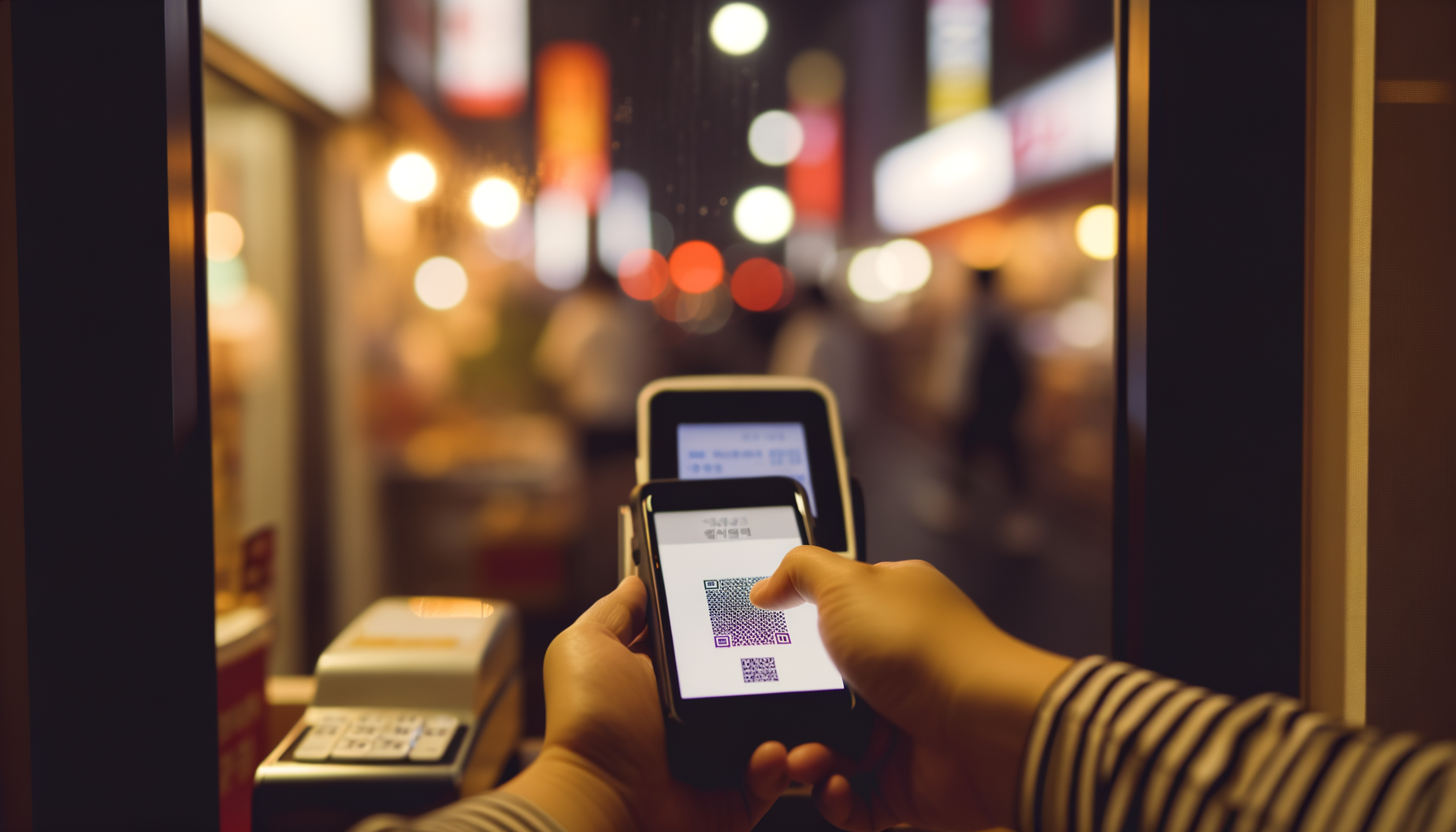
The first time I tried to order delivery in Korea, I downloaded Baemin — the app everyone talks about — and hit a wall almost immediately. Korean phone number required. Then a Korean-issued payment card. I stared at my screen for a good five minutes, then ordered a convenience store triangle sandwich instead and told myself I'd figure it out later.
A lot of foreigners have the same first week. Korea's food scene is genuinely one of the best in the world, but getting food delivered to your apartment as someone without a Korean phone number or bank account is harder than it should be. The good news is there are real workarounds, and once you know them, eating well here is pretty effortless.
Why Foreigners Can't Just Use Baemin
Baemin, Yogiyo, and Coupang Eats are the three big delivery apps in Korea, and they're all extremely good if you're set up properly. Baemin has the widest restaurant selection by far. Yogiyo is clean and beginner-friendly. Coupang Eats is fast and particularly useful if you're ordering for one.
The problem is that all three were built with Korean residents in mind. To register fully, you need a Korean phone number for OTP verification, and most of them won't process foreign-issued cards reliably. American Visa cards have the best reported success rate among the expat community, but Mastercard tends to fail more often. The issue isn't the apps being deliberately unfriendly — it's that Korean government regulations from an earlier tech era required real-name verification tied to a local phone number, and companies are still operating within those rules. The same reason Korea was famous for requiring Internet Explorer to do online banking.
There are some workarounds worth trying. On some versions of Baemin, signing in with Google or Apple instead of creating a new account skips the phone verification step entirely. Yogiyo lets you log in with an email address, which gets you limited functionality but at least gets you into the app. A few users report success using an international SIM card on roaming to receive the OTP text — results vary a lot depending on your carrier and region, so it's not something to count on.
For payment, the Namane card (나만의 카드) is a Korean prepaid card that you can top up through kiosks using a foreign card or a Wise transfer. It's a bit of a workaround setup but it works, and once it's loaded you can use it across apps the same way a Korean card would function. Convenience store gift cards from GS25, CU, or 7-Eleven are another option some people use. Cash on delivery still shows up on Baemin in certain restaurants depending on location, so it's worth checking on individual listings if you're stuck.
Asking a Korean friend to order for you and paying them back in cash is genuinely the most common solution among people who've just arrived. It's not a long-term plan, but it works on day three when you haven't sorted out a SIM yet.
The Easiest Route: Shuttle Delivery
If you want something that just works without any workarounds, Shuttle Delivery is the app built specifically for the expat market. The interface is fully in English, it accepts foreign-issued credit cards, and you don't need a Korean phone number to use it. The restaurant selection is smaller than Baemin and the prices run a bit higher, but for the first month or two it takes the hassle out of the whole thing completely.
A lot of expats I know started on Shuttle, got their Korean SIM and bank account sorted out, and then switched to Baemin once everything was set up. That's probably the most practical progression.
Eating at Restaurants
Delivery is honestly only part of the picture. Korea's sit-down restaurant scene is where the food gets really good, and getting around the language barrier in person is much easier than you'd expect.
Photo menus are extremely common here. If the menu has pictures — and most places have at least some — you can just point at what you want and say "이거 주세요" (ee-guh joo-say-yo), which means "this one please." It works every time. In places that have kiosk ordering (which is increasingly common at fried chicken spots, fast food places, and casual Korean restaurants), there's often an English language option on the screen. Worth checking before you spend ten minutes trying to figure out the Korean.
Getting the attention of your server is different than it is in most Western countries. You don't wait for them to come check on you — you press the call button on the table. Almost every Korean restaurant has one, and it's completely normal to press it whenever you need something. If there's no button, just say "저기요!" (juh-gee-yo) loudly — it means something like "excuse me" and it's the standard way to flag someone down. Foreigners who don't know this sometimes sit waiting for service for way too long.
If you have a food allergy or a spice preference, "맵지 않게 해주세요" (maep-ji an-ke hae-joo-say-yo) means "please make it not spicy." It's useful to have memorized if you're sensitive to heat, since Korean food can be quite spicy and dishes don't always look it.
Banchan, Tipping, and a Few Things That Throw People Off
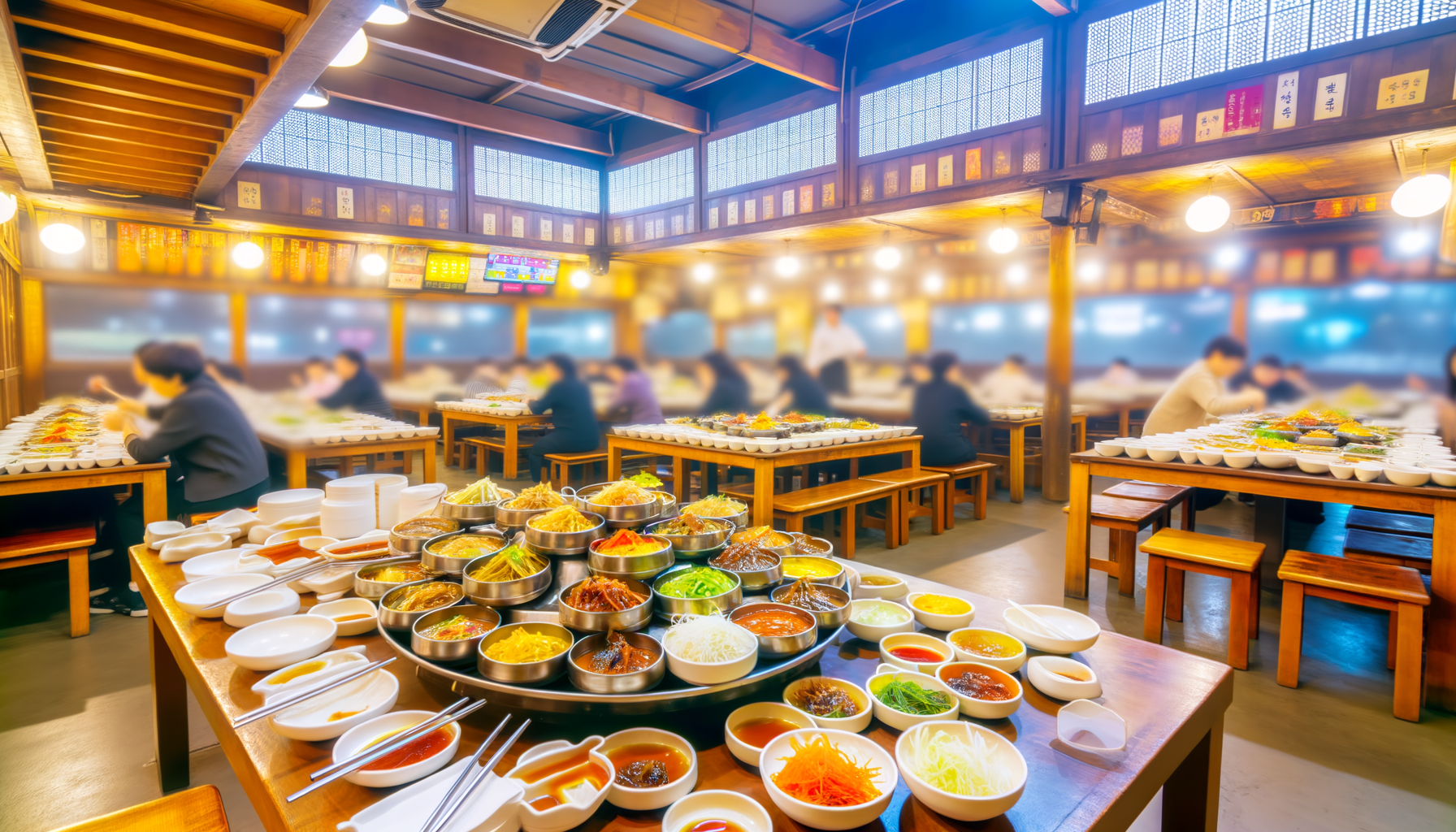
When you sit down at most Korean restaurants, especially traditional ones, you'll be brought a set of small side dishes without ordering them. These are banchan (반찬), and they're free and refillable — if you finish the kimchi or the bean sprouts, you can ask for more. The number and variety of banchan varies a lot by restaurant and region. Restaurants in the Jeolla region in the southwest are particularly well known for setting out an impressive spread.
Tipping does not exist in Korea. Not even a little bit. Under the Food Sanitation Act, food businesses are required to include all charges in the listed price, so what you see on the menu is what you pay. No service charge added at the end, no expectation to round up, nothing. A 2023 survey of over 12,000 Koreans found that more than 70% consider tipping "unacceptable." Leaving money on the table will confuse people more than anything else.
For vegetarians, Korean restaurants can be genuinely challenging. Meat, seafood, and anchovy-based stocks appear in a lot of dishes that look vegetarian on the surface. Buddhist temple restaurants near major temples are a reliable option — they serve plant-based food that's deeply rooted in Korean culinary tradition and excellent in its own right. In Seoul, Itaewon has the most international and vegetarian-friendly options if you're looking for variety.
Payment at most restaurants is easy — modern Korean restaurants accept foreign Visa and Mastercard without issue, and cash in Korean won works everywhere. Very small or traditional spots are sometimes cash-only, so it's not a bad idea to keep a bit of won on hand.
A Few Phrases Worth Knowing
You don't need to speak Korean to eat well here. But a handful of phrases go a long way toward making the whole experience smoother, and Koreans generally appreciate any attempt at the language.
"이거 주세요" (ee-guh joo-say-yo) handles most of your ordering needs. "물 주세요" (mul joo-say-yo) gets you water. "얼마예요?" (ul-ma-ye-yo) is "how much?" and "맛있어요!" (ma-shee-ssuh-yo) is "it's delicious" — which is genuinely useful to say at the end of a meal, because it is almost always true.
For delivery, if you're ever in a situation where you've managed to order through an app but can't receive a Korean phone call from the driver, leave a very detailed delivery note in your order. Something like: "Please leave at door. No need to call." In Korean it's "문 앞에 두세요. 전화 안 해도 됩니다." Copying that into the delivery note field will usually mean the driver can complete the delivery without needing to reach you.
Getting food in Korea figured out is one of those things that takes a week of confusion and then clicks into place completely. The apps are a real barrier at first, but Shuttle gets you through that initial period, and the actual experience of eating here — at restaurants, from street stalls, even just from convenience stores with a surprisingly good selection of hot food — is one of the genuine pleasures of living in this country.