TL;DR: Samsung bidet earns 2-year loyalty test with user planning to take it when moving, suggesting strong satisfaction despite unspecified price.
Frequently Asked Questions
Q: Are AliExpress home appliances good quality?
Many are surprisingly good for the price. Focus on products with high sales volume (1,000+) and positive reviews (90%+). The key is doing your research before buying.
Q: Do I have to pay customs duty in Korea?
Orders under $150 (about 200,000 KRW) are duty-free. Above that, you may pay 8-13% customs duty depending on the product category.
Q: What if the product arrives damaged or defective?
AliExpress has a Buyer Protection policy. You can open a dispute within 15 days of delivery for a refund or replacement. Always save photos and videos as evidence.
What other bidets should I consider?
- Portable Bladeless Neck Fan AliExpress Review — Is This $11 Neckband Fan Worth It?
- KERUI Smart Fingerprint Padlock Review — A $10 Keyless Lock From AliExpress
- USB Heated Blanket Shawl AliExpress Review — A $26 Wearable Electric Blanket Worth It?
This post contains affiliate links.
My first bidet experience was in a Korean office restroom.
I pressed the button out of curiosity, thinking "why would anyone use this?" But when I got home and finished up with just toilet paper, something felt... incomplete. It's like getting something sticky on your hands and only wiping it with a dry tissue. That was the beginning. A week later, I had a bidet in my Coupang shopping cart.
That was over two years ago. I've used it every single day since — and when I moved apartments, I uninstalled it and took it with me to reinstall at the new place. I think that says everything.
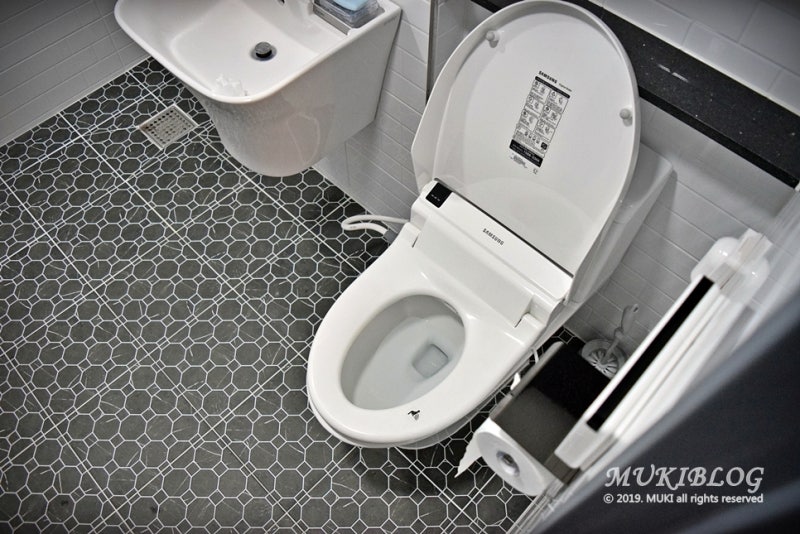
Bidets in Korea — What You Should Know
Bidets are completely standard in Korea. Many apartments and almost every hotel room already has one installed. If you're renting a place that doesn't have one, getting a bidet added to your toilet is easy and cheap — just order on Coupang and add the installation service at checkout, and a technician will come out and set it up in about 20 minutes. Samsung bidets run roughly ₩130,000–350,000 depending on the model. It's one of the first things worth buying when settling into a new Korean apartment, and once you've used one, you'll understand why non-bidet bathrooms feel like a downgrade.
Why did you choose Samsung over other brands?
There are plenty of bidet brands in Korea — Novita (market leader), Coway, Daelim Bath, Blooming, and Samsung. Here's why I went with Samsung:
1) Fast After-Sales Service A bidet deals with both water and electricity. When something breaks, you want it fixed fast. Samsung has over 180 service centers across Korea, so same-day or next-day repairs are common. I actually had a remote control glitch in year one — called Samsung, and a technician came the next day and fixed it in 10 minutes.
2) Full Stainless Steel Nozzle Cheaper bidets often use plastic (ABS) nozzles that build up limescale and bacteria over time. Samsung uses a full stainless steel nozzle, which is much more hygienic. After 2 years, there's zero discoloration or odor on the nozzle.
3) IPX5 Waterproof Rating Most Korean bathrooms are "wet" style — you hose down the entire floor when cleaning. IPX5 means the bidet can handle water jets from any direction. I've sprayed it directly with the shower head during bathroom cleaning for 2 years with zero issues.
How difficult is the installation process?
When ordering on Coupang, you can add an installation service. The technician came with the delivery and finished everything in about 20 minutes.
The process is dead simple:
- Remove the existing toilet seat — just 2 bolts
- Mount the bidet unit on the toilet and secure it
- Connect a T-valve to the water supply line
- Plug in the power cord
As long as your bathroom has a power outlet near the toilet, you're good to go — whether it's a studio apartment or a large flat. If you don't have an outlet, you'll need an electrician, but most modern Korean bathrooms come equipped.
What do you love most after using it?
Heated Seat — A Winter Game Changer
Korean bathrooms often aren't heated (no underfloor heating pipes). Sitting on a freezing toilet seat at 3 AM in winter is genuinely painful. With the bidet, the seat stays at a toasty 33~38°C with 3 adjustable heat levels. Honestly, this feature alone is worth the purchase.
Warm Water Wash — Even in Winter
Water temperature is adjustable too, so you get a warm wash year-round. Pressure goes from gentle to strong — start on the lowest setting if you're new to bidets. Trust me, hitting "strong" on your first try is... an experience 😂
UV Auto-Sterilization
Once a day, a UV LED automatically sterilizes the nozzle. No buttons to press, no maintenance needed. Combined with the stainless steel nozzle, hygiene is basically on autopilot.
Electricity Cost — Almost Nothing
A lot of people worry about bidet electricity costs. In reality, it's about $1~2 per month. Standby power is under 1W, and eco mode automatically turns off seat heating when not in use. In 2 years, I've never noticed an increase on my electricity bill.
Way Less Toilet Paper
Before the bidet, I used a decent amount of toilet paper per visit. Now, one or two sheets for a final pat-dry is all I need. I'd estimate my toilet paper usage dropped 70~80%. For a family of four, that could easily save $10~15 per month.
What are the main drawbacks or issues?
Dryer Is Slow
There's a warm air dry function, but it takes 2~3 minutes to fully dry. I usually skip it and just use a sheet of toilet paper. If the dryer feature matters to you, look into premium models or Japanese brands like TOTO.
No Deodorizer
Mid-range Samsung bidets don't include a deodorizer. Premium models do, but they cost significantly more. I find the bathroom exhaust fan sufficient, so this wasn't a dealbreaker for me.
Remote Placement
The wall-mounted remote uses adhesive, so once you place it, it's annoying to reposition. Take a moment during installation to find the most comfortable reach.
What should first-time bidet users know?
- Always start on the lowest pressure setting. You'll adjust within 3 days.
- Use the nozzle position adjustment to find your sweet spot.
- There's a dedicated feminine wash mode — great for the whole family.
- After one week, you'll find non-bidet toilets uncomfortable. I'm not exaggerating.
Is the Samsung bidet worth the price?
Samsung bidets range from about $110~300 USD depending on the model. The mid-range models with wash, heated seat, and UV sterilization offer the best value. Rental plans exist, but for bidets, buying is usually cheaper — rental costs over 3 years often exceed the purchase price.
And since you can uninstall and take it with you when moving, there's really no reason to hesitate!