TL;DR: Korean water-heated mattress pad from Hanil costs around $75 and reportedly cuts heating bills 50% - strong buy for cold climates.
This post contains affiliate links.
Hanil — A Korean Brand Worth Knowing
Hanil is a Korean company, and electric and water-heated blankets are a winter staple in Korean homes. Walk into any Korean department store or Coupang during October and you'll see entire sections dedicated to 전기장판 (electric heated pads) and 온수매트 (water heated mats). Hanil is one of the most trusted names in this category — they've been making heated bedding products for over 50 years and have a huge customer base on Coupang. If you're a foreigner spending your first winter in Korea, this is the kind of product locals will enthusiastically recommend when you complain about your heating bill.
You know what shocked me most about my first winter in Korea? The heating bill.
I started running the boiler in early November, and when the first gas bill arrived, my jaw hit the floor. 150,000 won (about $110). For a studio apartment! Where I lived before, heating never cost anywhere near that. And with December and January being even colder, I was staring down bills of 200,000 won or more.
I vented to a Korean friend over KakaoTalk. Their response was simple:
"Get a water heated mattress pad. It'll change your life."
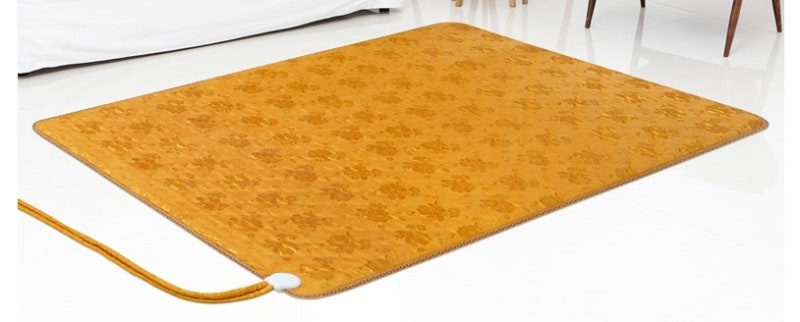
"A what?" Apparently it's a mat with warm water circulating through tubes inside it, heated by a small bedside boiler unit. You can sleep warm all night without ever turning on the main boiler. I was skeptical, but every Korean I asked said the same thing. So I went for it — a Hanil water heated mattress pad, double size.
Why Hanil?
When you search for heated mattress pads in Korea, brands like Hanil, Ilwol, and Kyungdong come up. Hanil is one of the most recognized names — they've been making heated bedding products for over 50 years. Good after-sales service, consistently high reviews on Coupang. And the price was right: around 100,000 won (roughly $75) for a double, which felt like a steal for something I'd use all winter.
Electric Blanket vs Water Heated Pad — What's the Difference?
In Korea, winter bedding comes in two main types: electric blankets (which use heating wires) and water heated pads (which circulate warm water). They look similar but work quite differently.
| Feature | Electric Blanket | Water Heated Pad |
|---|---|---|
| How it works | Heating wires generate heat directly | Boiler heats water, circulates through tubes |
| EMF radiation | Relatively higher | Almost none on the mat itself |
| Heat feel | Surface gets hot quickly | Gentle, even warmth |
| Price | $25~40 | $55~110 |
| Monthly electricity | $2~4 | $1.50~2.50 |
| Downsides | EMF concerns, fire risk | Needs water refills, slight boiler noise |
I went with the water pad mainly because of EMF concerns. An electric blanket has heating wires running right under your body for 7~8 hours every night. The water pad only has electricity in the boiler unit — the mat itself just has warm water flowing through it.
How easy is the setup process?
The box was big, but installation took less than 10 minutes:
- Lay out the mat — the double size is about 145×195cm, fits a standard bed perfectly
- Fill the boiler with water — just pour tap water into the reservoir
- Check the hose connections — make sure the tubes from the mat are properly connected to the boiler
- Turn it on — plug in, set the temperature, and it's warm within 5~10 minutes
Honestly, I didn't even need the manual.
What's it like sleeping on it the first night?
I set the temperature to level 5, crawled under the covers, and waited. About 10 minutes later, this gentle warmth started radiating up from underneath me. Not the sudden "ouch, hot!" of an electric blanket — more like lying on a heated floor (ondol). Even, full-body warmth.
The temperature goes from level 1 to 9. Here's what I settled on:
- Falling asleep: Level 5~6 (warms up fast)
- Sleeping: Level 3~4 (too warm = restless sleep)
- Cold snaps: Up to level 7 (when it drops below -15°C)
There's a timer from 2 to 8 hours. I set mine to 6 hours — it shuts off around 3~4 AM, but the blankets stay warm enough until morning.
Does it really cut your heating bill in half?
Here are the real numbers:
- November (no heated pad): Gas bill 150,000 won 😱
- December (with heated pad): Gas bill 70,000 won 😮
- January (including a cold snap): Gas bill 85,000 won
The trick is simple: turn off the boiler at night. Sleep with just the heated pad on. Run the boiler only for 20~30 minutes in the morning when you shower. Keep it off when you're out during the day. That alone cuts the gas bill by more than half.
The pad's electricity cost? About 2,000~3,000 won per month ($1.50~2.50). It draws around 300W, but the boiler only runs intermittently once the water reaches temperature. With monthly savings of 70,000~80,000 won on gas, the pad pays for itself in the first month.
What About Noise?
I'll be honest — it's not completely silent. The boiler unit makes a soft humming sound when heating and circulating water. Quieter than a fridge, but noticeable at first. After about a week, my brain tuned it out completely.
If you're noise-sensitive, place the boiler as far from your pillow as possible — under the bed or in a corner. The hoses are long enough to give you 1~2 meters of distance.
Are there any safety concerns to know about?
🔥 Low-Temperature Burns
This is the big one. Even at low settings, prolonged contact with the same body area can cause low-temperature burns. Be extra careful if you:
- Fall asleep after drinking (dulled sensation)
- Are elderly or have young children (thinner skin)
- Have diabetes (possible nerve damage reducing heat sensitivity)
Always use the timer. I stick to level 5 or below with a 6-hour timer as my personal rule.
💧 Water Level & Leak Checks
Since the system circulates water, you'll need to top up the reservoir occasionally — about 2~3 times per season. Forgetting can cause the boiler to overheat. Check the water level indicator once a month.
Rarely, leaks can happen at hose connections. Double-check everything during setup, and if you notice dampness around the mat, inspect the connections right away.
📦 Off-Season Storage
Korean summers are hot and humid, so you'll pack this away by April or May:
- Drain all the water
- Dry the insides of the hoses (prevents mold)
- Roll it up, don't fold (prevents hose kinks)
- Store somewhere cool and dry
Folding can kink the hoses and block water flow next season — a mistake a lot of people make.
How does it perform after several months of use?
I used this through December to February — the coldest stretch of the Korean winter. Here's my honest scorecard:
- Warmth: ★★★★★ (toasty without the boiler)
- Running cost: ★★★★★ (practically free)
- Noise: ★★★★☆ (slight hum, easy to get used to)
- Convenience: ★★★★☆ (occasional water refills)
- Value: ★★★★★ (pays for itself in one month)
If you're spending winter in Korea — especially in a studio or one-room where heating bills add up fast — a water heated mattress pad is an absolute must-have. For around $75, your winter transforms completely. I'm already planning to use mine again next year. Honestly, I can't imagine how I would've survived without it. 😂
Frequently Asked Questions
Q: Are AliExpress home appliances good quality?
Many are surprisingly good for the price. Focus on products with high sales volume (1,000+) and positive reviews (90%+). The key is doing your research before buying.
Q: Do I have to pay customs duty in Korea?
Orders under $150 (about 200,000 KRW) are duty-free. Above that, you may pay 8-13% customs duty depending on the product category.
Q: What if the product arrives damaged or defective?
AliExpress has a Buyer Protection policy. You can open a dispute within 15 days of delivery for a refund or replacement. Always save photos and videos as evidence.
What are some similar products worth considering?
- LG TROMM Dryer Honest Review After 1 Year — Why It Became My Must-Have Appliance
- Rechargeable LED Camping Headlamp AliExpress Review — A $5 Light That Actually Works
- Samsung Bluesky 3100 Air Purifier — 3 Months in a Small Apartment, Honest Review
This post contains affiliate links.