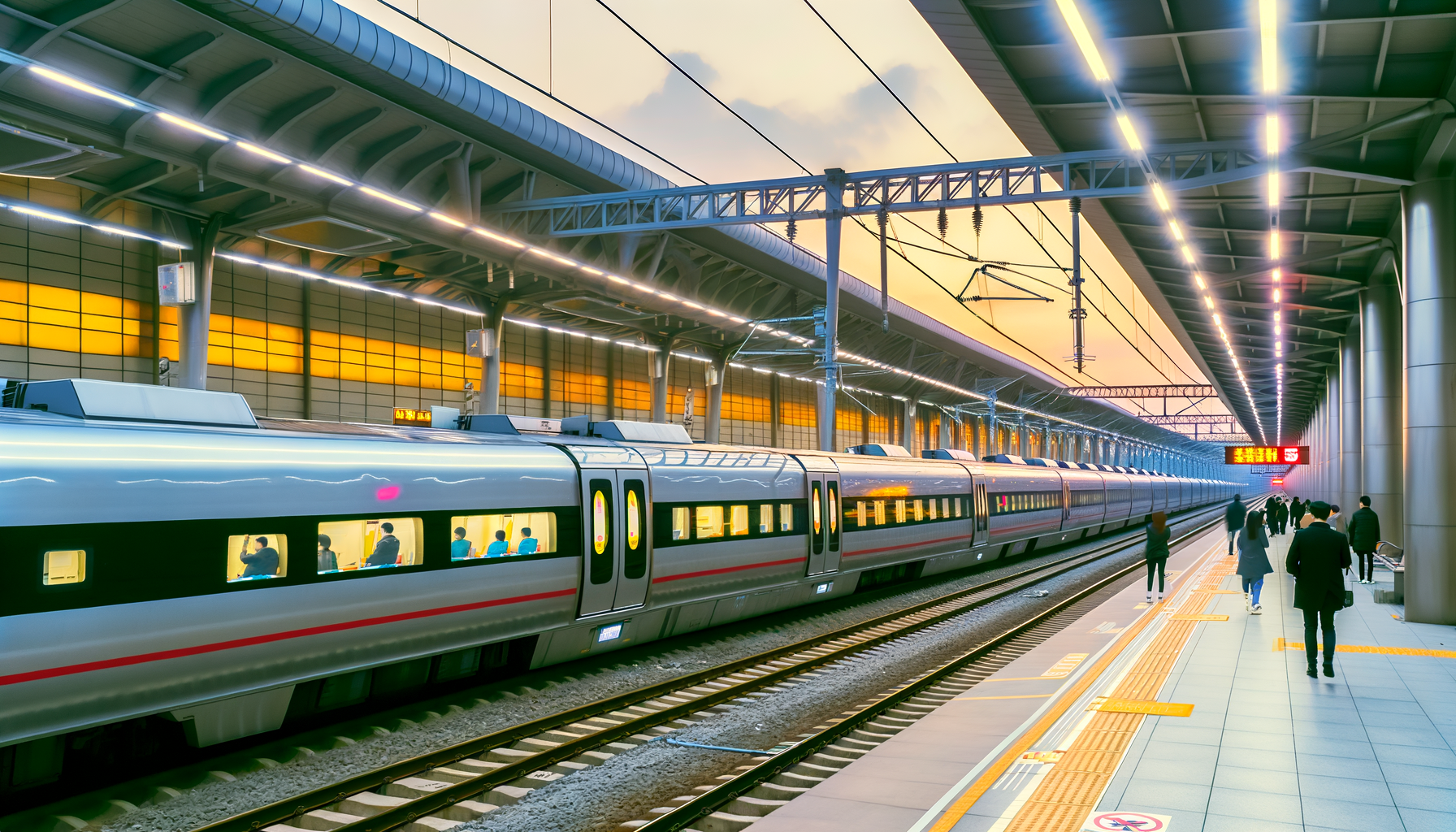
It's Friday evening and you're standing at Seoul Station, ticket in hand, slightly smug because you planned ahead. Your friend, who also lives in Seoul but in Gangnam, took a different train from a different station, arrives in Busan eight minutes before you do, and paid less. You both took "the KTX." Except one of you didn't. Welcome to Korean high-speed rail, where there are actually two separate systems run by two separate companies, and figuring out which one to use — and how to book it when neither website really wants you to succeed — is its own minor adventure.
This guide covers everything: KTX vs SRT, how to actually buy a ticket as a foreigner, whether the KR Pass is worth the math, and why Korea's intercity buses are secretly one of the best deals in the country.
Wait — There Are Two Different High-Speed Trains?
Yes. The KTX (Korea Train eXpress) has been running since April 1, 2004, and is operated by Korail, the state-owned rail company. The SRT (Super Rapid Train) launched on December 9, 2016, operated by a separate private company called SR Corporation. Both use the same dedicated high-speed rail lines, both top out at 305 km/h in regular service, and both get you to Busan — but they depart from completely different stations in Seoul and are booked on completely different platforms.
The KTX departs mainly from Seoul Station (central, easy to reach from most neighborhoods) and Yongsan Station (for Honam line destinations like Gwangju, Jeonju, and Yeosu). The SRT departs exclusively from Suseo Station, buried in the southeastern corner of Seoul near Gangnam. If you're staying in Hongdae or Myeongdong, Suseo is genuinely inconvenient. If you live in Gangnam, it might actually be your closest option.
So Which One Should I Take?
The short answer: KTX goes everywhere; SRT only covers Busan and Mokpo directions (plus some extensions added in late 2023). If your destination is anywhere other than those corridors — Gangneung, Gyeongju, Jeonju via direct train, the east coast — you need KTX and that's the end of the discussion.
If you're heading to Busan, you have a choice. The SRT gets there about eight minutes faster (Seoul–Busan runs around 2 hours 8 minutes versus the KTX's approximately 2 hours 15 minutes) and costs roughly 10% less — on the Seoul–Busan standard fare of around ₩57,000 for KTX, that's a meaningful difference. If you have a KR Pass (the foreigner rail pass), it's valid on KTX but not SRT, so that narrows your choice immediately.
How Do I Actually Buy a Ticket?
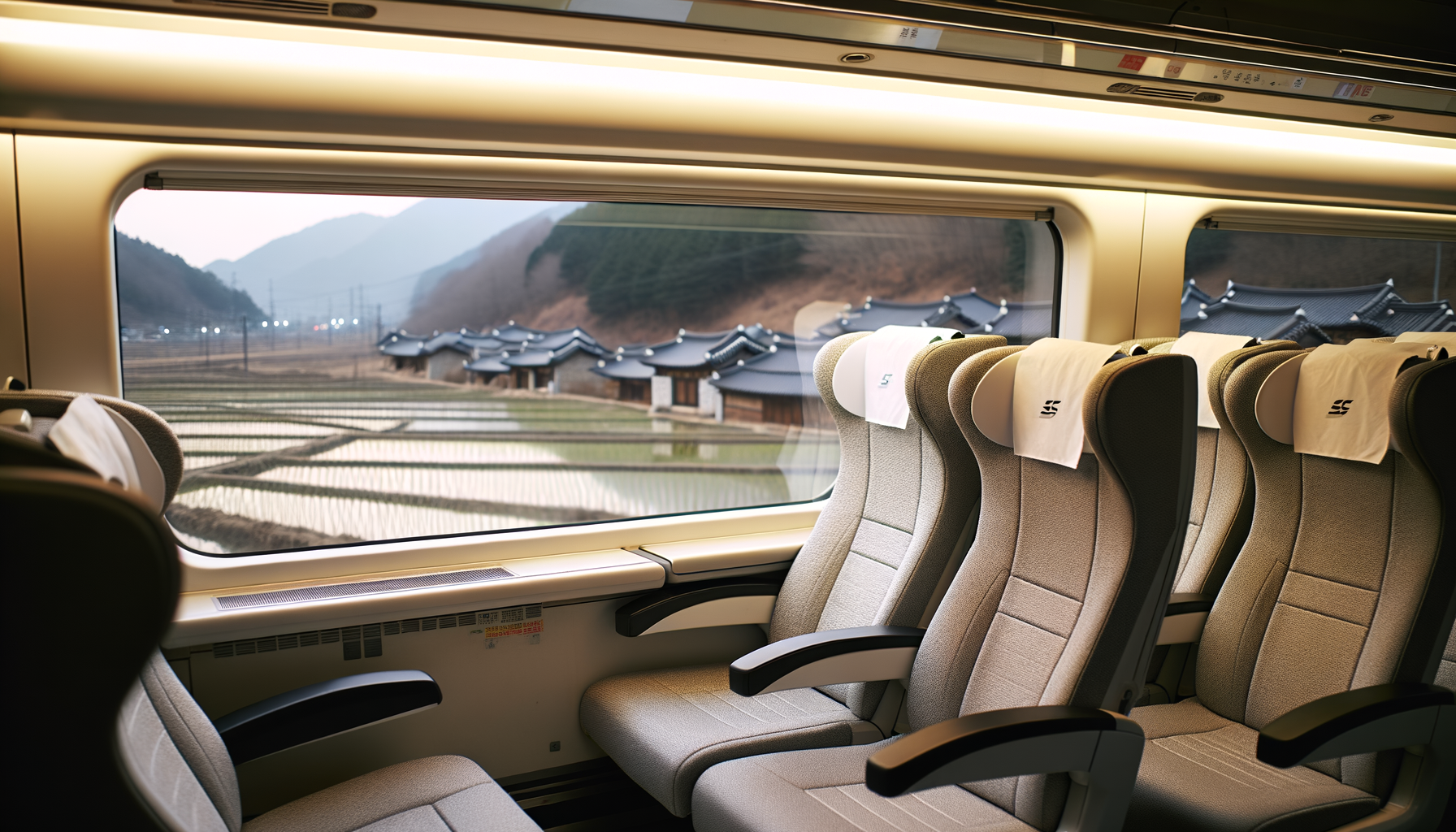
Here's where the fun begins. For the KTX, the official English booking site is letskorail.com — look for the language toggle. It accepts foreign Visa and Mastercard, and once you've entered your departure city, destination, date, and passport number (yes, it's required), you can pay and either print your ticket or retrieve it via the Korail app (called 코레일톡, available on iOS and Android). The English in the app is functional, if occasionally baffling.
At the station, the ticket machines at major terminals do have foreign-card-capable machines — they're separately marked, not the standard machines, which will cheerfully reject your foreign card. The staff at major stations like Seoul Station and Busan Station generally speak enough English to help. You can also book through third-party sites like Klook, Rail.Ninja, or 12go.asia, which have better English interfaces and a small service fee that most people find worth it.
For the SRT, the official booking site (etk.srail.kr) is Korean only. There is no English version. The SRT app is also Korean only. The practical solution is to go to any Korail ticket counter in person — confirmed per multiple sources — and ask staff to book an SRT ticket for you. They can do it. Alternatively, some third-party booking services cover SRT routes.
One note about timing: tickets open one month in advance. Weekend trains on popular routes fill up fast. Around Korean holidays — Lunar New Year (설날) and Chuseok (추석) — demand is so intense that tickets are essentially gone within hours of the booking window opening, sometimes weeks before the holiday. If you need to travel during a major holiday, book the moment the window opens or consider traveling a day before or after the peak rush.
Is the KR Pass Actually Worth It?
The KR Pass (also called the Korail Pass) is a rail pass exclusively for non-Korean nationals. It's modeled loosely on the Japan Rail Pass concept: buy a pass, ride trains, wave it at the conductor. It comes in consecutive-day versions (3 or 5 days) or a "Select" flex version (2 or 4 days of travel within a 10-day window), and there's a meaningful youth discount for travelers aged 13–27.
Approximate prices as of early 2026 (verify current rates at korail.com/global before buying): a 2-day Select pass runs around ₩79,000 for youth and ₩112,000 for adults; a 3-day consecutive pass runs around ₩93,000 for youth and ₩130,000 for adults. Since a single Seoul–Busan KTX standard ticket runs roughly ₩57,000, two round trips to Busan alone would cost around ₩228,000 — the pass starts making sense if you're doing multiple long-distance trips.
That said, there's a catch people routinely miss: the pass does not automatically reserve a seat. You still need to make separate seat reservations (fee is typically ₩0–₩2,000 per trip), and you can only reserve up to two seats per person per day. If seat reservations are sold out, you can still ride as a standee — but that's a long time to stand between Seoul and Busan. For a multi-city trip hitting several destinations over three to five days, the pass is excellent value, especially on the youth rate. For one or two trips, do the math first.
What About the Intercity Buses?
Korea's intercity bus network is genuinely excellent and is the mode of transport that many expats discover about six months too late. There are two categories: express buses (고속버스, gosok bus) that stick mostly to highways with minimal stops, and intercity buses (시외버스, sioe bus) that reach smaller cities and rural towns — including plenty of destinations that have no train station at all. Sokcho (gateway to Seoraksan National Park) is a classic example: there's no train, but buses run frequently from Seoul.
For popular routes, the price difference versus KTX is striking. Seoul to Busan by bus takes about 4.5 hours versus 2h 15 min by train, but costs roughly ₩24,000–₩34,000 versus the KTX's ₩57,000. On a three-hour route like Seoul to Jeonju (~₩13,000–₩17,000 by bus), the bus is actually faster door-to-door if you factor in getting to Seoul Station and waiting.
Bus classes are where things get interesting. Standard buses (일반) have a 3+2 seat layout — fine for shorter trips. Premium buses (우등) have a 2+1 layout with proper reclining seats and more legroom. And then there's the "프리미엄" (Premium) class: 21 ultra-wide seats with individual entertainment screens that are legitimately comparable to business class on a budget airline. On a four-to-five hour trip, the price difference over standard is usually worth considering.

Which Bus Terminal Do I Need in Seoul?
Seoul has three main bus terminals, and they serve different parts of the country. The Seoul Express Bus Terminal (서울고속버스터미널) in Gangnam — subway Lines 3, 7, and 9, Gosonbusterminal station — handles buses heading toward the Gyeongbu corridor (Busan, Daegu, Daejeon, and surrounding areas). In the same building complex, Central City Terminal (센트럴시티) serves the Honam corridor (Gwangju, Mokpo, Jeonju, and the southwest). Dong Seoul Terminal (동서울터미널), at Gangbyeon station on Line 2, handles eastern destinations including Gangneung, Sokcho, and Wonju.
Booking online is easy via kobus.co.kr, which has English, Chinese, and Japanese language options. You can also buy tickets at the terminal's self-service machines or staffed counters, and foreign credit cards are generally accepted at major terminals — though for smaller or regional terminals, having a backup option is wise. Check directly with the terminal or KOBUS if you're unsure.
What Usually Goes Wrong?
The most common headache for foreigners is the regular ticket vending machine refusing your foreign credit card. The fix is straightforward: find the specially marked foreign-card machines at major stations, or book online at letskorail.com in advance.
The SRT's Korean-only booking platform trips up plenty of people who want the slightly cheaper fare. Just go to a Korail counter; the staff can book SRT for you in person. Also worth knowing: the KTX has multiple Seoul departure stations, and your ticket will specify which one. Yongsan handles Honam/Jeolla line trains, Cheongnyangni handles the Gangneung east coast line — getting to the wrong station will cost you your train.
For airport arrivals: rather than taking the AREX all the way into Seoul Station and then switching trains, check whether Bus 6770 from Incheon Airport to Gwangmyeong Station still runs — it has historically been a faster and cheaper way to connect to KTX southbound. Confirm the current route via the official AREX or Korail site before relying on it.
Korea's train and bus systems are, once you understand the landscape, genuinely among the best in Asia for getting around. The booking hurdles are real but surmountable — and once you've done it once, it's second nature. Plan ahead on weekends, do the KR Pass math honestly, and don't sleep on the premium buses.