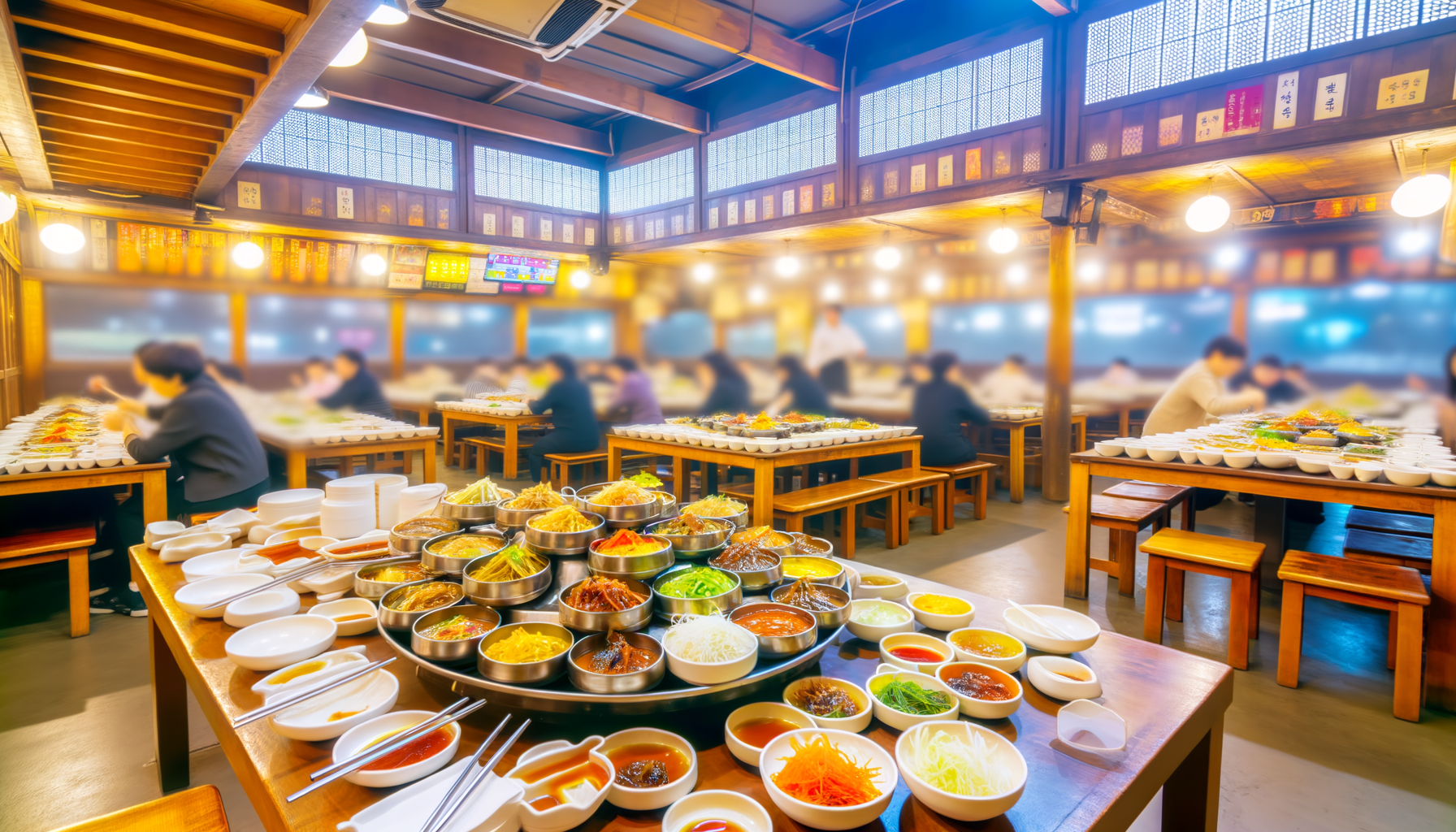
You're standing at the pharmacy counter. The pharmacist is explaining something about your prescription — something that probably matters — and you're nodding along like you understand, smiling, saying "네, 네" at intervals that feel appropriate, and then you go home and take double the dose because you genuinely had no idea. Or maybe that's not your story. Maybe yours is the restaurant where you accidentally ordered something you're allergic to, or the landlord text message you let sit unanswered for three weeks because you were too embarrassed to admit you couldn't read it.
Living in Korea with zero Korean isn't impossible — Seoul is remarkably navigable for English speakers, and Papago can get you surprisingly far — but there's a ceiling, and you hit it fast. The good news: Korean is more learnable than its reputation suggests, and when you're already surrounded by it every day, you have an enormous advantage over someone grinding Duolingo in Des Moines.
Here's what actually works.
Should You Even Bother Learning the Script First?
Yes, and faster than you think. Hangul — the Korean writing system — is widely considered one of the most logically designed scripts in the world. Most learners can read (not understand, just phonetically read) Hangul within one to two days of focused effort. This alone is transformative: menus become legible, bus stops make sense, food labels stop being a mystery box.
The alphabet isn't the hard part. Korean grammar and vocabulary — particularly for English speakers — is genuinely difficult. The US Foreign Service Institute rates Korean as a Category IV language, its hardest tier, estimating around 2,200 class hours to professional proficiency. That's the long game. For survival Korean, though — ordering coffee, telling a taxi driver where to go, getting through a doctor's visit — you're looking at three to six months of consistent study.
Learn Hangul first. Everything else builds on it.
What App Actually Helps (and What Doesn't)?
Duolingo is fine for building a daily habit and picking up your first hundred words. It is not fine as your primary learning tool beyond the very beginning. The Korean course has improved over the years, but the gamification structure means you can rack up streaks while still being unable to construct a coherent sentence. Use it like a warm-up, not a workout.
The app that expat Korean learners actually swear by is Talk To Me In Korean (TTMIK). It's been running since 2009, it's free at the basic level, and the grammar lessons are genuinely structured in a way that makes Korean logic click. The paid PDF books and courses are reasonably priced and worth it if you're serious. Think of it as a real curriculum you happen to access through your phone.

For vocabulary, Anki is the tool most serious self-learners end up using. It's a spaced repetition flashcard system — free on desktop, a one-time purchase on iOS — and while it requires more setup than a polished app, the payoff is real. Building a deck of the most common 1,500 to 2,000 Korean words is the kind of thing that unlocks roughly 80 percent of daily conversation. Not glamorous, but it works.
Round out your phone toolkit with Naver Dictionary (네이버 사전) — dramatically better than any other Korean-English dictionary, with example sentences and hanja breakdowns — and Papago for translation, which handles Korean far better than Google Translate for anything beyond simple phrases.
One genuinely underrated option: HelloTalk and Tandem for language exchange. Many Koreans actively want to practice English, and a straightforward trade — you help them with English, they help you with Korean — costs nothing and gives you real conversation practice you can't get from an app.
Free Classes Are a Thing, and Most Expats Don't Know About Them
Here's something that surprises a lot of foreigners: Korea has a fairly robust network of government-funded free Korean classes, and they're not hard to access.
Every neighborhood (동) has a 주민센터 (Jumin Center, or Community Service Center). Many of these run free or very low-cost Korean language classes for foreign residents — typically in terms of one to three months, with enrollment opening in spring and fall. Classes tend to be small and conversational, focused on practical daily use rather than exam prep. Bring your Alien Registration Card to register. The fee, if there is one at all, is usually somewhere between ₩10,000 and ₩30,000 per term.
The Multicultural Family Support Center network (다문화가족지원센터) — more than 220 centers nationwide — runs more structured Korean programs under the Ministry of Gender Equality and Family. These are primarily aimed at marriage migrants, but many centers accept all foreign residents with an ARC. Eligibility varies by location, so it's worth calling or visiting your nearest center to check directly rather than assuming you don't qualify. Finding your nearest one: search "다문화가족지원센터 + [your district name]" on Naver Maps, or ask at your local 주민센터.
King Sejong Institutes (세종학당) also operate inside Korea in some cities, offering free or subsidized language and culture classes. Less common domestically than abroad, but worth checking at sejong.or.kr if you're interested.
When Does It Make Sense to Pay for Classes?
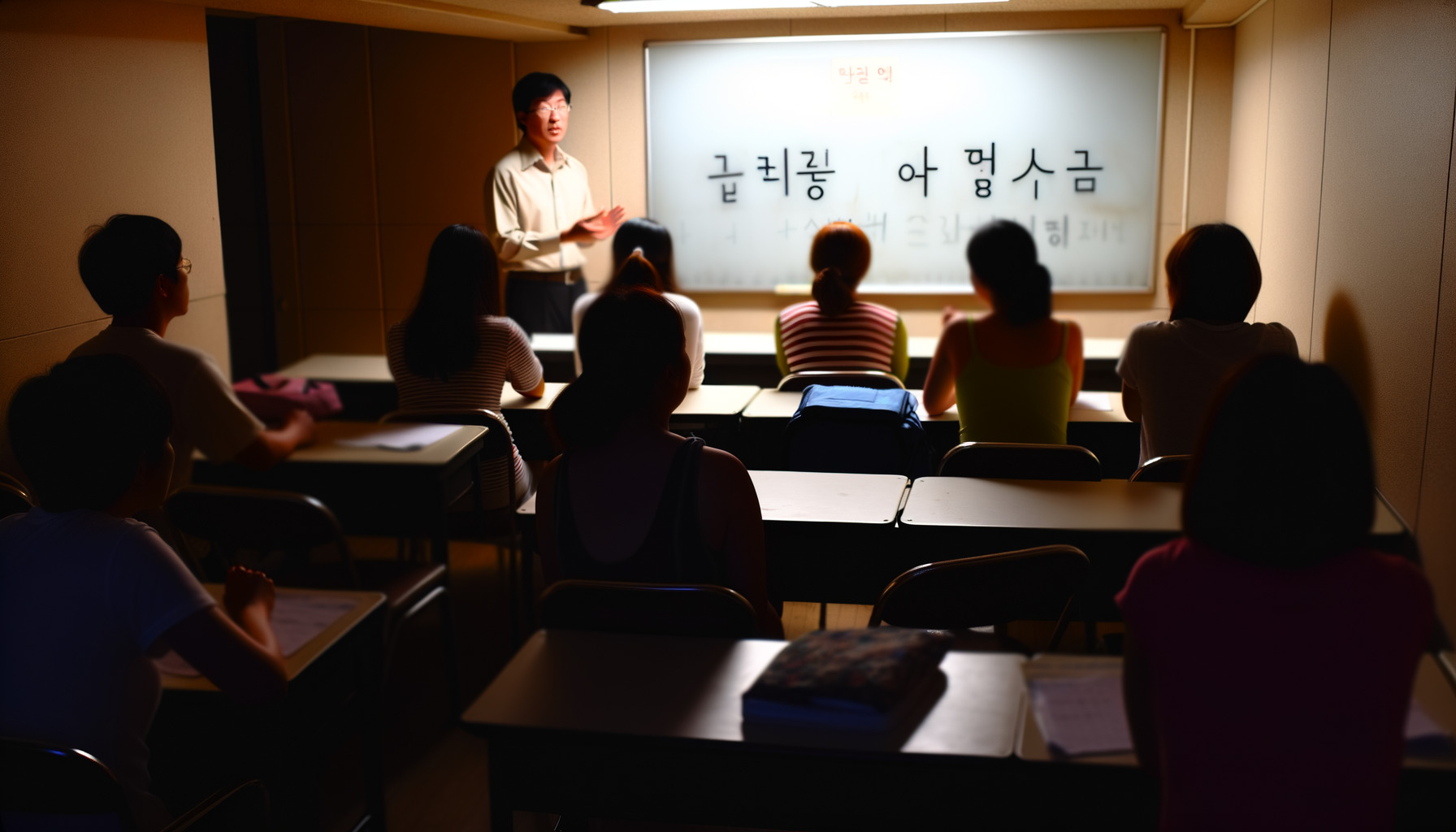
If you have the time and the budget, university language programs are hard to beat for structured progress. Yonsei, Sogang, Seoul National University, and Ewha all run intensive Korean programs — roughly four hours a day, Monday through Friday, for ten weeks per term. The tuition is significant (check directly with each institution's language institute for current pricing), but the curriculum is excellent, class sizes are small, and the immersive environment accelerates progress in a way that self-study rarely replicates.
Private language schools (어학원) are cheaper and more flexible — better for working expats who can't commit to daytime classes. Evening and weekend options exist at many schools. Quality varies, so read reviews on Naver and Google before committing. Private tutors, found through italki or by asking around expat communities, give you the most flexibility and can tailor exactly to your weaknesses; check current rates directly on those platforms, as they fluctuate.
What's the TOPIK Exam, and Do You Need It?
TOPIK — the Test of Proficiency in Korean — is the official government proficiency exam. Six levels: Levels 1–2 are beginner (tested together as TOPIK I), and Levels 3–6 are intermediate to advanced (TOPIK II). TOPIK draws hundreds of thousands of test-takers each year worldwide — check topik.go.kr for the current exam schedule, fees, and registration.
In Korea, the exam runs six times a year in paper format (January, April, May, July, October, November) and three times a year in newer computer-based format (March, June, September) (schedule subject to change; check topik.go.kr for current year dates). Registration is online at topik.go.kr; fees are ₩35,000 for TOPIK I and ₩40,000 for TOPIK II (fees as of 2024; verify at topik.go.kr). Certificates are valid for two years after results.
Do you need it? Depends on what you're doing here. For daily life, no. For Korean workplace job applications, TOPIK 3–4 is commonly expected. For F-5 permanent residency, you'll generally need at least TOPIK 3 (confirm the current requirements with Korea Immigration Service directly, as rules can shift). For university admission in Korea, most schools require a minimum of TOPIK 3–4.
As a motivational milestone, TOPIK Level 2 is a reasonable first target. It corresponds to roughly 1,500 to 2,000 vocabulary words and comfortable navigation of familiar daily situations. With consistent study — an hour a day — six to twelve months is a realistic timeline.
So What Actually Works?
The honest answer is: whatever you'll actually keep doing. The expats who make the most progress tend to combine a few things — TTMIK for structure, Anki for vocabulary, and some form of speaking practice, whether that's a language exchange partner, a community center class, or a tutor. None of those are expensive. None require quitting your job.
The environment around you is the real advantage you have over people studying Korean elsewhere. Menus, signs, subway announcements, product labels — it's all free listening and reading practice if you pay attention. Set your phone to Korean once you know the basics. Pick a Korean drama and watch it with Korean subtitles once you're past beginner stage. Make one small mistake in public every day.
You already live in the best possible place to learn this language. That's most of the work, honestly — you just have to start using it.
Daily life gives you more exposure than any classroom can. Grocery shopping in Korea, navigating public transit, and figuring out what's actually available at a Korean convenience store all put you in contact with real Korean — signs, receipts, announcements, menus. None of it feels like studying. All of it sticks.