It was 11pm on a Tuesday when my stomach decided to stage a full protest. I didn't know what was wrong. I didn't know which hospital to go to. I definitely didn't know the Korean word for "my abdomen is staging a coup." I just grabbed my ARC and hoped for the best.
If you've been in Korea for any length of time, you've probably had a moment like that — or you're about to. The good news is that Korean healthcare is genuinely excellent and surprisingly affordable. The less-good news is that navigating it as a foreigner involves a handful of landmines that nobody puts in the welcome packet. This is the guide I wish I'd had on arrival.
So Where Can You Actually Go?
Let's get the most practical thing out of the way first. In Seoul, the five so-called "Big 5" university hospitals all have dedicated International Patient Centers staffed with English-speaking coordinators. These aren't just someone who "speaks a little English" — they're full departments set up specifically for foreign patients, with translation support and help managing insurance paperwork.
The Big 5 are Severance Hospital (연세대학교세브란스병원) near Sinchon, Seoul National University Hospital (SNUH) in Jongno, Asan Medical Center in Songpa, Samsung Medical Center (SMC) in Gangnam, and Seoul St. Mary's Hospital in Seocho. Samsung has arguably the most polished international experience — their International Healthcare Center has been running since September 1995, making it one of the longest-established expat-focused clinics in the city. If you need to book with them, their international center can be reached at +82-2-3410-0200 or by email at ihs.smc@samsung.com.
Gangnam Severance is also worth knowing about if you live south of the river. And if you're in a less central district, Korea University's hospitals in Anam and Guro, Hanyang University Hospital in Seongdong, and Kyung Hee University Medical Center in Dongdaemun all have at least some English capability.
For lower-cost options, Seoul has a handful of city-run public hospitals — Seoul Medical Center in Jungnang-gu, Boramae Medical Center in Dongjak-gu, and National Medical Center in Jung-gu are the main ones. They're not as polished as the big private university hospitals, but they're significantly cheaper and they're real hospitals.
Wait, Do I Actually Need a Big Hospital?
Probably not. And this is the thing that trips up a lot of newcomers.
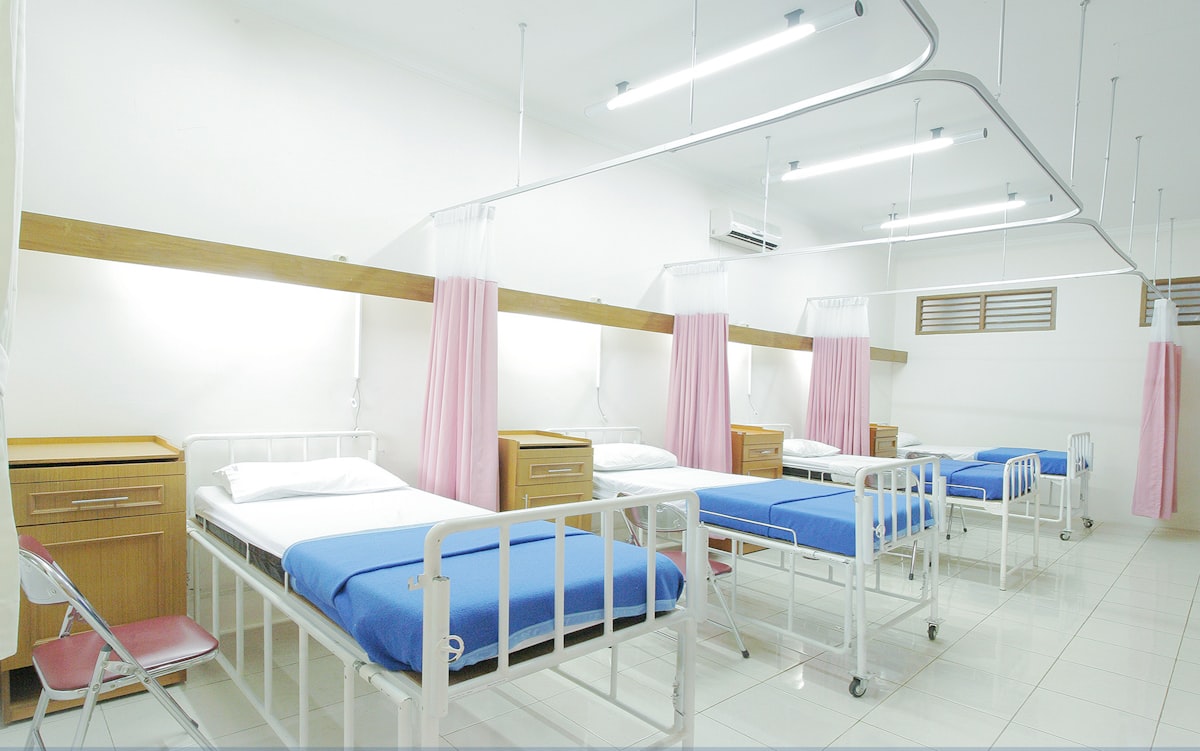
Korea has a four-tier hospital system. At the bottom are clinics (의원, uiwon) — small neighborhood facilities with under 30 beds, meant for exactly the kind of thing you'd see a GP for at home: a cold, a sprained ankle, a rash you've been staring at for two weeks. Then come general hospitals (병원), then larger general hospitals (종합병원), and finally the top-tier tertiary teaching hospitals (상급종합병원) like the Big 5 above.
Here's the counterintuitive part: Koreans culturally tend to bypass the clinic entirely and go straight to a big hospital for minor issues. You'll see it constantly. But for foreigners, the clinic tier is often your best friend — visits typically cost just 5,000 to 15,000 KRW with NHIS insurance, they're faster, and neighborhood clinics in expat-heavy areas like Itaewon, Mapo, and Gangnam quite often have English-speaking staff. The Big 5 hospitals, meanwhile, can mean waiting 2–4 hours even with an appointment for a non-emergency.
If you go to a top-tier hospital without a referral letter from a clinic, you can still get in — walk-ins are accepted — but your copay jumps noticeably, up to 60% of the cost without a referral versus 40–50% with one. For something serious, absolutely go straight to the big hospital or the emergency room. But for a sore throat at 10am? Find a neighborhood clinic first.
The Coverage Gap Nobody Tells You About
Here's the landmine that gets almost every new expat. South Korea's National Health Insurance system (NHIS) is mandatory for all residents — but you can only enroll once you have your Alien Registration Card (ARC). Getting your ARC takes at least a month, often four to six weeks after you arrive. Which means that for your first month or more in Korea, you are completely uninsured.
If you're employed here, your employer covers 50% of your monthly NHIS premium once you're enrolled. Self-employed residents pay based on income. Either way, the average monthly NHIS cost works out to roughly 120,000 KRW (around 100 USD). Once you're in the system, NHIS covers between 50% and 80% of approved medical costs — your out-of-pocket share is the remaining 20–50% depending on the type of facility and treatment.
The practical advice: bring travel insurance from home and keep it active until your ARC arrives and your NHIS enrollment is confirmed. Without NHIS, you're paying 100% — though even then Korean healthcare is still dramatically cheaper than what most Westerners are used to. A clinic visit without insurance typically runs 30,000–80,000 KRW all in, including the prescription.
One more thing on insurance: if you end up needing it for reimbursement claims, always ask for an itemized receipt (영수증, yeongsujeung). Hospitals will give you one automatically if you ask. Without it, you'll have a hard time getting reimbursed by any external insurer.
The Pharmacy Situation Is Different Here
This one surprises almost everyone. In Korea, hospitals and clinics do not dispense medication. After every single visit, you take your prescription to a separate pharmacy (약국, yakguk) — there will always be one immediately near any clinic or hospital. This is just how the system works.
The good news is that Korean pharmacists are university-trained with six-year degrees and often speak reasonable English. Most prescriptions cost between 2,000 and 10,000 KRW, which is almost comically affordable. Most pharmacies are open 9am to 9pm. Near bigger hospitals and expat neighborhoods like Hongdae, Itaewon, and Gangnam, 24-hour pharmacies are easier to find.
One practical note: medications are labeled in Korean, but pharmacists will explain dosage verbally and most are used to foreign patients. Google Translate's camera mode can scan Korean text on labels in real time if you need to check what you've been given. Also, don't expect to find the Western brand names you're used to — the medications exist, but under different names or formulations. Tylenol (타이레놀) is actually available, but many other brands are not.
A heads-up about Korean prescribing culture: doctors here tend to prescribe multiple medications for minor ailments. Getting five or six different pills for a mild cold is totally normal and not a cause for alarm — it's just the local style.
How Do You Find a Doctor Near You?
For ongoing care and neighborhood clinics, a few tools genuinely help. Naver Map (네이버 지도) is your best search tool — search "영어 가능 병원" (English-capable hospital) or try "[your neighborhood] English clinic" and you'll usually find options with reviews and hours. KakaoMap works similarly.
For urgent situations where you don't know where to go, dial 1339. This is Korea's national health information hotline, it operates 24/7, and it has English-speaking staff. They can help you figure out where to go, what's covered, and can even provide basic phone interpretation assistance. Memorize this number. Seriously.
Facebook groups like "Seoul Expats" and "Foreigners in Seoul" are genuinely useful for getting real-world recommendations for specific English-speaking doctors by specialty — these communities update in real time in ways that no static website can.
And if you're employed, ask HR. Most companies with significant foreign staff have vetted medical provider lists.
A Few More Things Worth Knowing
Most neighborhood clinics close from around 12:30 to 2:00pm for lunch and are completely closed on Sundays. Emergency rooms at any hospital are open 24/7 regardless of tier or day, and you never need a referral for an ER visit.
Medical records in Korea are not automatically transferred between hospitals — each keeps its own in Korean. If you're switching providers or seeing a specialist somewhere new, bring imaging CDs and printed summaries from your previous visits.
One last thing: if you have questions specifically about your NHIS enrollment or coverage, the NHIS official website (nhis.or.kr) is almost entirely in Korean. The 1339 hotline is by far the best English-language resource for NHIS questions. Call them; they're genuinely helpful.
Korea's healthcare system is good. The costs are low, the quality at the major hospitals is excellent, and once you understand the quirks — the tier system, the ARC gap, the pharmacy stop after every visit — it becomes manageable pretty quickly. The first visit is the hardest. After that, you'll know the drill.
Emergency numbers to save now: 119 (ambulance/fire), 1339 (health information, English available), 112 (police).