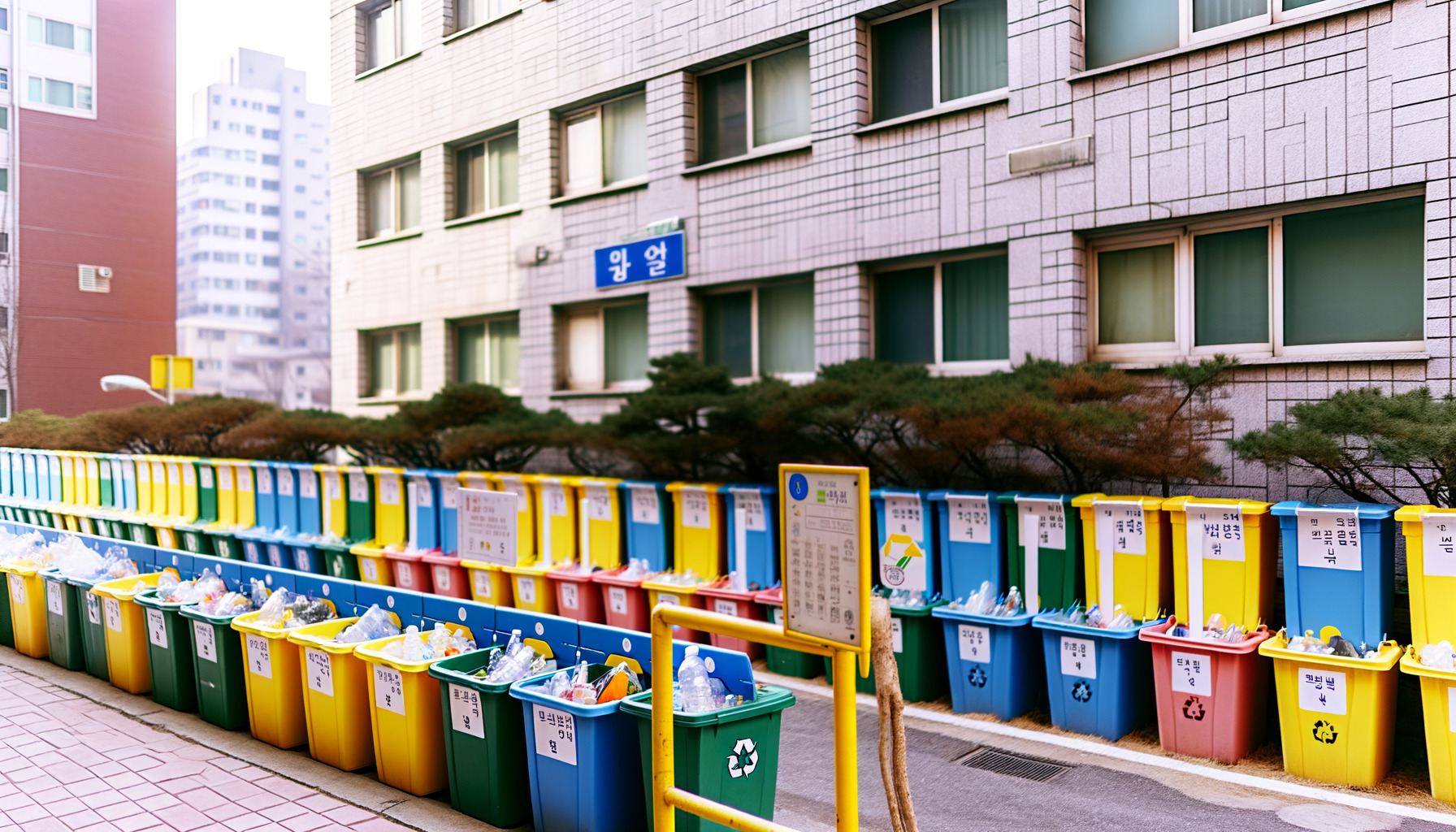
It's your first Tuesday night in Korea. You've got a bag of trash, a vague recollection that Korea is "really good at recycling," and absolutely no idea what to do. There are bins everywhere downstairs — one for glass, one for cans, one for what might be vinyl, one for plastic, a big machine that smells faintly of last week's dinner, and a stack of official-looking opaque bags that clearly cost money. Your neighbor gives you a look. You put your bag down and walk away. Nobody needs to know.
This post is for that version of you — and for every expat who has been confidently tossing food scraps into the wrong bin, or quietly using regular plastic bags because nobody told them that was illegal.
Wait, It's Actually Illegal?
Yes. Korea's waste system isn't a suggestion. It operates under the Waste Management Act (폐기물관리법) and has been mandatory since the mid-1990s. Using an unauthorized bag for your general garbage can get you fined up to 100,000 KRW. Dumping bulky furniture without the right sticker: up to 500,000 KRW. Tossing food waste in with your regular trash: up to 100,000 KRW. Enforcement varies by neighborhood — some areas are relaxed, others have CCTV cameras pointed directly at the bins and neighbors who take this seriously — but the point stands. You're not in Kansas anymore, and the trash rules here are real.
The flip side: Korea has become one of the world's highest-performing recycling nations, with household recycling rates consistently above 60%. That didn't happen by accident. It happened because the government made proper disposal mandatory, built in a financial incentive, and created a system that — once you understand it — actually makes sense.
So What's a 종량제 봉투, and Why Do You Need One?
The first thing you need to buy when you move to Korea is not a SIM card or a pillow. It's 종량제 봉투 — government-issued, district-specific garbage bags that are the only legal way to dispose of general (non-recyclable, non-food) trash.
The name roughly translates to "volume-rated bag," and that's exactly what it is. The cost of waste disposal is built into the bag price, so the more you throw away, the more you pay. This system, introduced in 1995, led to a dramatic reduction in waste nationwide because people started actually thinking about what they were tossing out.
You can buy them at any convenience store — GS25, CU, 7-Eleven, Emart24. The bags come in sizes ranging from 3L to 100L, with prices varying by district. A 20L bag typically runs somewhere between 1,500 and 2,500 KRW, but your local gu (district) sets the price, so it's worth checking the actual bags at the store rather than trusting any figure online. One important note: 종량제 봉투 are district-specific. The bags sold near your home are the ones to use. Buying them elsewhere might create complications, so just grab them at the corner store.
What goes in these bags? Non-recyclable household waste — used tissues, broken ceramics, leather goods, diapers, rubber items, dirty packaging that can't be cleaned. What does NOT go in: food waste, clean recyclables, e-waste, or anything bulky. Those all have their own systems.
How Does Recycling Actually Work?
Korea separates recyclables into distinct categories, each with its own bin. The bins in your apartment complex are usually color-coded or clearly labeled — but in Korean, which makes that first night confusing. Here's the lay of the land.
Paper and cardboard (종이류) is pretty intuitive — newspapers, books, boxes, clean paper bags. The key word is "clean." Wax-coated paper, greasy pizza boxes, and thermal receipt paper don't belong here. Flatten your cardboard boxes before you put them in.
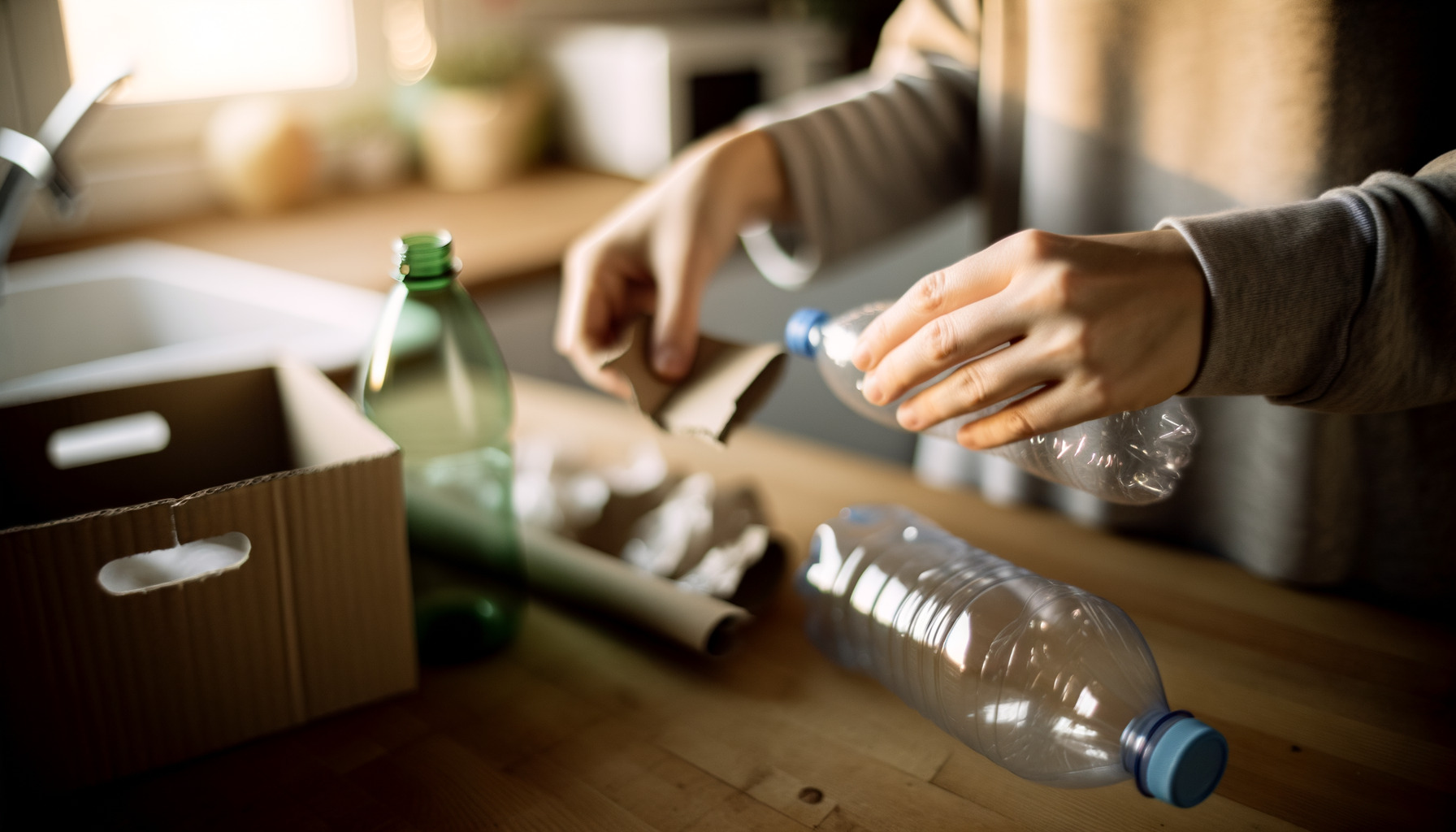
Plastics have two sub-categories worth knowing. Hard plastics (PP, PE, PS containers) get rinsed and go in the general plastic bin. But transparent PET bottles — your water bottles, soda bottles — now have a dedicated separate bin in many areas (투명 페트병). Remove the label, rinse it out, crush it flat, take off the cap. Vinyl and film plastic (plastic bags, wrap) are a completely different category with their own bin (비닐류). This trips up almost every newcomer.
Glass bottles should be rinsed and depapped before going in the bin. Here's a fun one though: if you're tossing soju or beer bottles, check the bottom for a deposit. Korea has a bottle return system for glass soju and beer bottles — you can bring them back to a convenience store for 50 to 130 KRW per bottle. Most foreigners just toss them, which is fine, but it's basically leaving money on the counter.
Metal cans (캔류) — rinsed and crushed if you can. Aerosol cans need to be completely empty before recycling; check local rules as practices vary.
Styrofoam (스티로폼) gets its own bin and must be clean — no food residue, no tape, no labels if you can manage it. Do not mix it with regular plastic. Contaminated styrofoam goes in the general trash bag.
Batteries and fluorescent light bulbs don't go in any recycling bin. Most apartment buildings and convenience stores have dedicated small boxes for these. Look for them near the entrance or the recycling area.
The Food Waste Situation (This Is Where Most People Go Wrong)
Korea banned food waste from landfills in 2005 and made separate collection mandatory nationwide in 2013. The country now recycles over 95% of its food waste, turning it into livestock feed and fertilizer. It's genuinely impressive — and it requires you to participate.
Food waste (음식물 쓰레기) must be disposed of separately. Depending on your building or district, you'll use one of a few systems. Many modern apartment complexes have RFID smart bins — you get a card from building management (관리사무소), tap it on the machine, dump your food waste, and you're charged by weight at the end of the month. Other areas use food waste bags (음식물 쓰레기 봉투), which are separate from the general trash bags and sold at convenience stores. Some areas use stickers or chips. The first thing you should do when you move in is ask building management which system applies to you.
Now, the critical question everyone gets wrong: what exactly counts as food waste?
The rule of thumb that actually works: if a farm animal could eat it, it's food waste. If not, it's general trash. Vegetable scraps, fruit peels, cooked and uncooked meat, rice, noodles, bread, kimchi — food waste. But hard bones (beef, pork, large chicken bones), fruit pits (avocado, peach, mango), shellfish shells (oysters, clams, crabs), eggshells, onion outer skins, corn husks — those all go in the 종량제 봉투. This catches out nearly every foreigner at some point. The eggshell one especially feels wrong.
Also: drain as much liquid as possible before disposing of food waste. In RFID buildings, you're charged by weight, so watery kimchi stew or soup adds up fast.
What About Big Stuff?
When it's time to throw out a sofa, a washing machine, or a mattress, you can't just leave it in the recycling area. Korea has a separate system for 대형폐기물 (large waste items). You need to purchase a 대형폐기물 sticker from your district office — most gu offices have an online portal or app for this now — pay the fee based on the item type, schedule a pickup, and attach the sticker to the item before leaving it at the designated spot.
Costs vary by gu and item: a small chair might be 1,000–3,000 KRW, a sofa anywhere from 3,000–10,000 KRW, a refrigerator up to 15,000 KRW. If you're buying new appliances from a retailer, ask whether they'll take the old one — many will, for free. If your furniture is still usable, Danggeun Market (당근마켓) or donation boxes (아름다운 가게) are worth exploring first.
Apartment vs House: Does It Matter?
If you're in an apartment or officetel, you have it relatively easy. There's usually a central recycling area with labeled bins, building management you can ask questions, and possibly an RFID food waste machine. Rules and schedules are posted.
If you're in a standalone house or multi-family dwelling (단독주택, 다가구), things get more hyperlocal. You'll need to know your neighborhood's specific collection day and timing — putting bags out too early or too late is a real issue. The most reliable approach: watch what your neighbors do on trash day.
The TL;DR You'll Actually Use
Buy 종량제 봉투 at your nearest convenience store. Use them only for genuine non-recyclable general waste. Put clean recyclables in the appropriate bins — remembering that vinyl, PET bottles, and styrofoam all have their own separate bins. Ask building management about food waste collection before you guess. For big items, get the sticker from your district office first. And if you're not sure? When in doubt, check directly with your gu office (구청) — most have English-language hotlines or at least English-language websites now.
It takes a week or two to build the habits. After that, it becomes second nature — and you'll find yourself quietly judging visitors who try to stuff a water bottle in the wrong bin.